
THE MOTOWN PIONEER YOU'VE PROBABLY NEVER HEARD OF!
The man who may have helped Berry Gordy launch his empire.
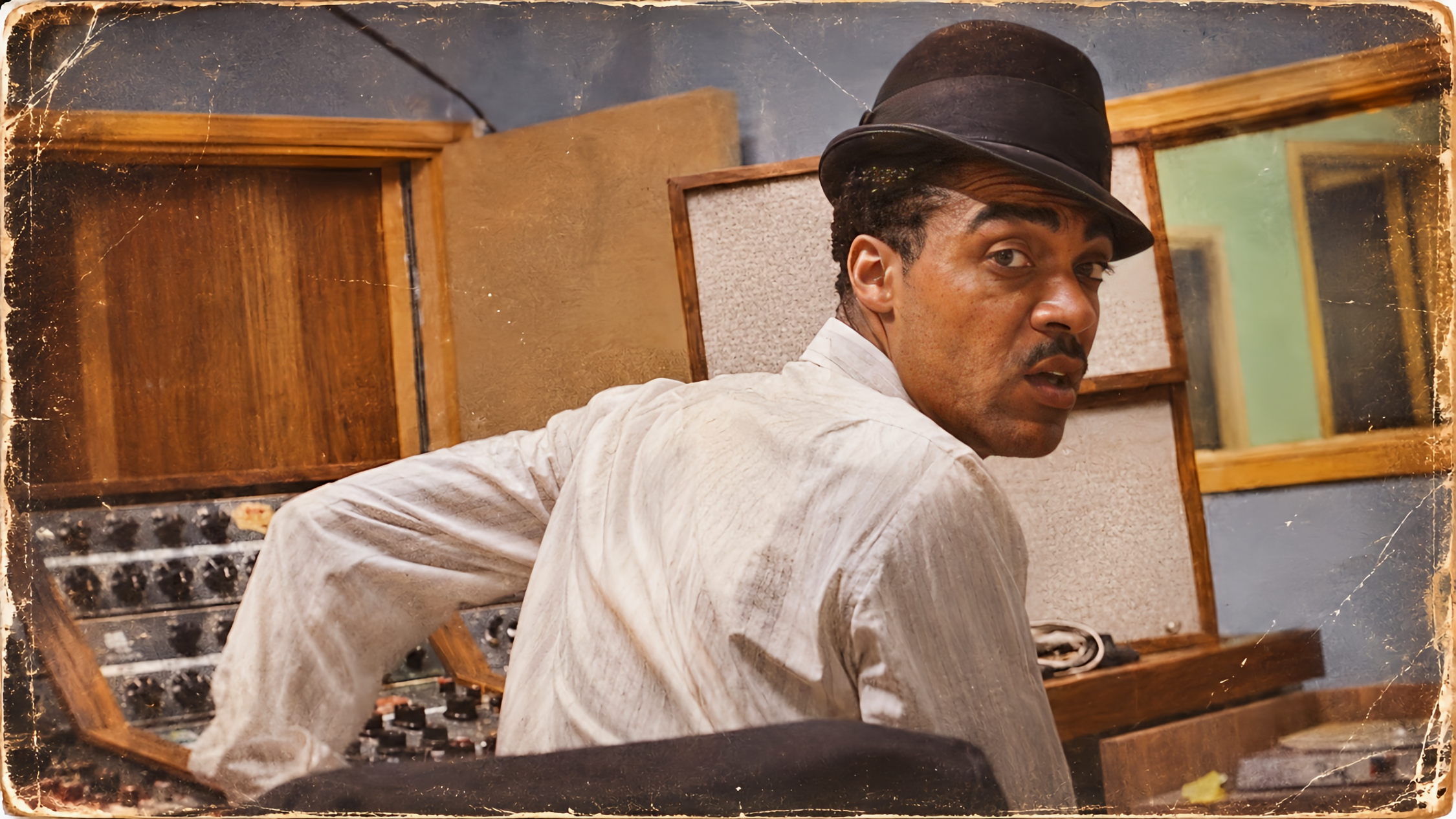
André Williams pictured at a recording studio console. Date and location unknown.
What if one of the men who helped Berry Gordy get his record company off the ground is someone even dedicated Motown fans barely know?
His name was André Williams.
And although he never became as well known as early Motown creative figures like Holland-Dozier-Holland, Norman Whitfield, Smokey Robinson, or Mickey Stevenson, Williams was already making records in Detroit before Motown existed. He would eventually become part of Gordy's early creative operation, write and produce recordings for several Motown artists, and claim a surprisingly important role in the company's beginnings.
But the most intriguing part of his story involves a chance encounter, a Detroit barbershop, and a connection to a major record company.
To understand that story, we have to go back to Detroit before Hitsville.
BEFORE MOTOWN, THERE WAS FORTUNE

André Williams in his early years. The Detroit R&B pioneer was already making his mark on the music scene before Motown was founded.
Born November 1, 1936, in Bessemer, Alabama, Zephire André Williams came to Detroit as a teenager and immersed himself in the city's vibrant rhythm-and-blues scene.
During the 1950s, Detroit was already a hotbed of musical talent. Independent record labels, neighborhood clubs, theaters, and recording studios were producing sounds that would eventually help shape soul music.
Among those labels was Fortune Records, the fiercely independent Detroit operation run by Jack and Devora Brown.
Williams became associated with Fortune and the vocal group the Five Dollars, developing a performance style that was difficult to categorize.
He wasn't exactly singing. He wasn't simply speaking, either.
His delivery was rhythmic, humorous, suggestive, and often outrageous. Decades before rap became a recognized musical genre, Williams was talking his way through records with a swagger that would later earn him the nickname “Godfather of Rap.”
Among his early recordings were “Jail Bait,” “Greasy Chicken,” and “Bacon Fat.”
The latter became his breakthrough. Released in 1956, “Bacon Fat” reached No. 9 on Billboard's R&B chart and helped establish Williams as a distinctive voice in the growing rhythm-and-blues market.
He was already a recording artist with national recognition while Berry Gordy was still trying to establish himself in the music business.
And that's where their paths would cross.
THE BARBERSHOP ENCOUNTER THAT MAY HAVE CHANGED MOTOWN HISTORY
In interviews years later, Williams recalled an encounter involving a young Berry Gordy and a Detroit barbershop.
According to Williams, after becoming acquainted with Gordy and hearing his songwriting, he provided him with contact information for Art Talmadge, an executive at United Artists Records.
That detail is significant.
In 1959, Gordy launched his own record label, Tamla, and released Marv Johnson's “Come to Me,” one of the first records associated with his fledgling enterprise.
United Artists subsequently took over national distribution of the recording, giving it access to a much larger market than Gordy could reach independently.
“Come to Me” became a national hit, reaching No. 30 on Billboard's pop chart and No. 6 on the R&B chart.
For a businessman attempting to build an independent record company in Detroit, that kind of exposure was enormously important.
Williams maintained that his introduction helped make the United Artists connection possible.
Was André Williams responsible for launching Motown?
That would be overstating the evidence.
Gordy's determination, songwriting experience, business instincts, family support, and network of Detroit musicians were all essential to what followed.
And Williams' account is his own recollection, rather than an independently established explanation of how the distribution agreement came about.
Nevertheless, if his account is accurate, it places him at a potentially important moment in the earliest days of the Motown story.
It's a fascinating possibility — particularly considering how little attention Williams receives in conventional histories of the company.
ANDRÉ WILLIAMS ARRIVES AT MOTOWN
Williams eventually became part of Berry Gordy's growing musical operation, contributing as a songwriter and producer during Motown's formative years.
His work extended across an impressive roster of early Motown talent, including Stevie Wonder, Mary Wells, Eddie Holland, Marvin Gaye, the Contours, the Temptations, and the Supremes.
Among the recordings connected to his Motown years were Stevie Wonder's “Thank You for Loving Me,” Mary Wells' “Oh Little Boy,” Eddie Holland's “If Cleopatra Took a Chance,” and Marvin Gaye's “Mojo Hannah.”
With the Contours, he worked on recordings including “Shake Sherry Shake,” “Don't Let Her Be Your Baby,” and “Can You Do It.”
He also worked with the Temptations during their earliest years. Alongside Mickey Stevenson, Williams helped produce “Oh Mother of Mine” and “Romance Without Finance,” with the two producers sharing the credit Dre-Mic.
His involvement with the early Supremes included the recording “This Is It,” although archival documentation indicates that its original production credit was subsequently reassigned to Faye Hale.
These recordings reveal a Motown that was still experimenting, searching for its identity, and developing the musical approach that would eventually become known around the world.
Interestingly, another fun fact is that Williams also recorded under his own name for Motown. In 1961, his single “Rosa Lee (Stay Off the Bell),” backed with “Shoo Doo,” was assigned to the company's short-lived Miracle label. However, the record apparently never received a commercial release, making it another fascinating curiosity from Motown's earliest years.
THE TEMPTATIONS RECORDING THAT LED ME TO ANDRÉ WILLIAMS
One of my personal favorites from the Motown vault is a little-known Temptations recording titled “Positively Absolutely Right.”
Written and produced by André Williams, the recording was completed at Hitsville on December 20, 1963.
Yet it remained commercially unreleased for more than four decades before finally appearing on the British compilation A Cellarful of Motown! Volume 2, released July 4, 2005.
It was one of the recordings that led me to discover André Williams and explore his remarkable contributions to Detroit music.
What fascinates me about Williams is how difficult his musical personality is to categorize.
He wasn't simply an early precursor to rap. His records also possessed a raw, funky, rhythm-driven energy that anticipated elements of the funk music that would emerge in later years.
There was something wonderfully unconventional about his approach. His rhythmic delivery, unusual arrangements, humor, and willingness to experiment made him sound unlike almost anybody else working in rhythm and blues during the 1950s and early 1960s.
Listening today, it's easy to hear musical qualities that would later become familiar in the worlds of funk and hip-hop.
One can even imagine someone like George Clinton appreciating Williams' uninhibited musical imagination, although a direct influence shouldn't be assumed without evidence.
Williams seemed to be operating in his own musical universe, long before the industry h
A STORMY RELATIONSHIP WITH BERRY GORDY
André Williams was outspoken, independent-minded, and rarely inclined to follow somebody else's rules.
That temperament could be useful in a recording studio.
It could also create problems inside a company whose founder demanded discipline and control.
In later interviews, Williams described a turbulent working relationship with Berry Gordy, claiming he had been fired and rehired multiple times.
His recollections suggest two strong-willed men who recognized each other's abilities but did not always agree about how records should be made.
Williams was an unconventional creative force, while Gordy was building an increasingly organized operation designed to produce records with broad commercial appeal.
And one of their disagreements involved a song that would become an enduring rhythm-and-blues classic.
THE HIT THAT MOTOWN TURNED DOWN
In 1963, André Williams helped create “Shake a Tailfeather,” a song credited to Williams, Otha Hayes, and Verlie Rice.
According to Williams, he offered the composition to Berry Gordy.
Gordy turned it down.
Williams later recalled the rejection plainly: Berry didn't like it.
Rather than abandon the song, Williams took it elsewhere.
The Five Du-Tones recorded “Shake a Tailfeather” for Chicago's One-derful label, and the single became an R&B hit.
But the song's story was only beginning.
Over the years, “Shake a Tailfeather” was recorded or performed by numerous artists, including Ike & Tina Turner. It later reached an entirely new audience through Ray Charles' unforgettable performance in the 1980 film The Blues Brothers.
Imagine what might have happened if Gordy had accepted the song.
Could the Contours, with their energetic performances and dance-oriented recordings, have transformed it into another Motown classic?
We'll never know.
But the song's rejection reminds us that even Berry Gordy, whose instincts helped create one of the most successful record companies in music history, occasionally let a hit slip through his fingers.
And André Williams had another success waiting just around the corner.
HIS SUCCESS DIDN'T STOP AT MOTOWN
André Williams' creative life extended well beyond his association with Hitsville.
He continued working across Detroit's independent record scene, collaborating with artists and labels whose recordings would become important parts of the city's soul-music heritage.
One of his most notable achievements was his involvement in “Twine Time,” the infectious dance record made famous by Alvin Cash and the Crawlers.
Released in 1964, the song became a major R&B hit and helped fuel a dance craze.
Williams also worked with independent labels in Detroit and Chicago, including Ric-Tic, Wingate, and Checker, remaining active as a songwriter, producer, and recording artist.
His own recordings included “Cadillac Jack,” which became an R&B hit in 1968.
His career was anything but conventional.
He moved between musical styles, record companies, and creative roles, sometimes enjoying success and sometimes encountering serious personal and professional difficulties.
But he never completely lost his musical identity.
That individuality, which sometimes made him difficult to accommodate within the Motown organization, would eventually introduce his music to an entirely new generation of listeners.
THE UNLIKELY COMEBACK
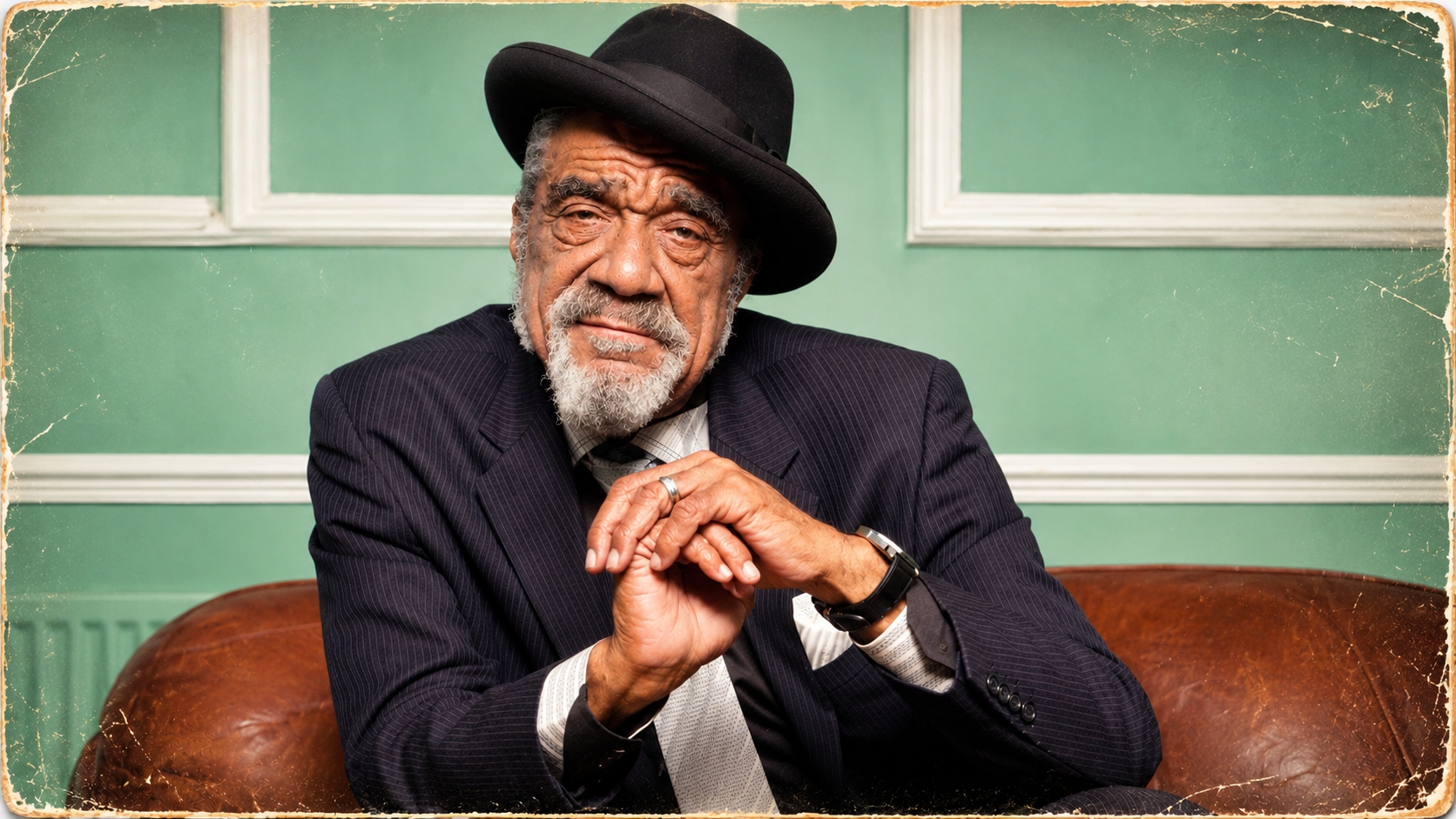
André Williams in his later years. After decades of personal struggles and musical reinvention, the Detroit R&B pioneer found a new generation of admirers.
For many artists of his generation, the passing of the 1960s meant the gradual end of a recording career.
For André Williams, it eventually meant something very different.
After years marked by addiction, financial hardship, and periods of homelessness, Williams experienced an unexpected revival beginning in the 1990s.
A new generation of musicians and listeners discovered the raw, eccentric energy of his early recordings.
He returned to recording and performing, working with garage-rock and alternative musicians who appreciated his unconventional style.
His later music could be gritty, provocative, and far removed from the carefully crafted sound of classic Motown.
But it was unmistakably André Williams.
In 2016, he released I Wanna Go Back to Detroit City, a title that seemed particularly fitting for an artist whose life and musical identity were so closely connected to Detroit.
Williams died on March 17, 2019, at age 82.
THE MOTOWN STORY IS BIGGER THAN THE FAMOUS NAMES
When we celebrate Motown history, we naturally return to the stars whose recordings changed popular music.
But there were many other people whose contributions helped create the environment in which that success became possible.
Some worked behind the scenes. Others moved between competing Detroit record labels, contributing their talents wherever opportunities arose. And some made extraordinary recordings that remained hidden in the vaults for decades.
André Williams was one of those remarkable personalities who never fit neatly into any single category.
He was a recording artist, songwriter, producer, musical innovator, and larger-than-life character whose career stretched across generations.
His account of introducing Berry Gordy to a United Artists executive remains an intriguing piece of Motown's early oral history, even if the precise circumstances have not been independently established.
But his documented contributions to Detroit rhythm and blues, early Motown, and the development of funk-influenced music are significant in their own right.
And perhaps that's the most important point.
André Williams doesn't need to have single-handedly launched Motown to deserve recognition.
He was already part of Detroit's musical landscape before the company existed, and his creative fingerprints can be found across decades of rhythm and blues, soul, and rock music.
For me, discovering recordings like the Temptations' “Positively Absolutely Right” is a reminder of why we continue exploring the Motown vaults. Behind the familiar hits are extraordinary musicians, forgotten recordings, and stories still waiting to be told.
André Williams died on March 17, 2019, but his music and influence remain.
November 1, 2026, marks what would have been his 90th birthday — a fitting occasion to revisit the extraordinary life of a Detroit music original.
Happy Heavenly 90th Birthday, André Williams.
Chasing Motown — Classic Made Current.
