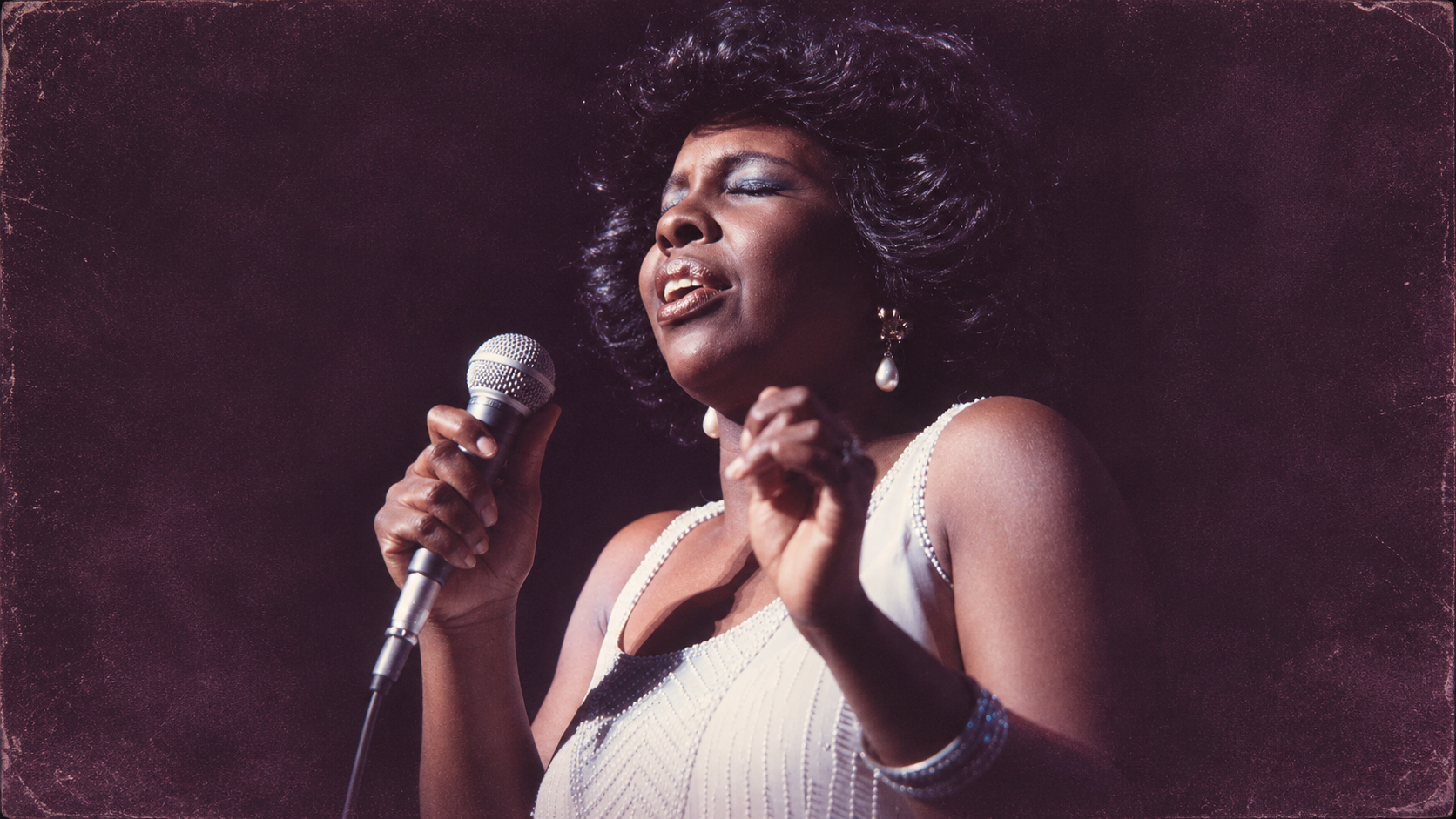
Pipe Dreams: Would Motown Have Seen a Leading Lady?
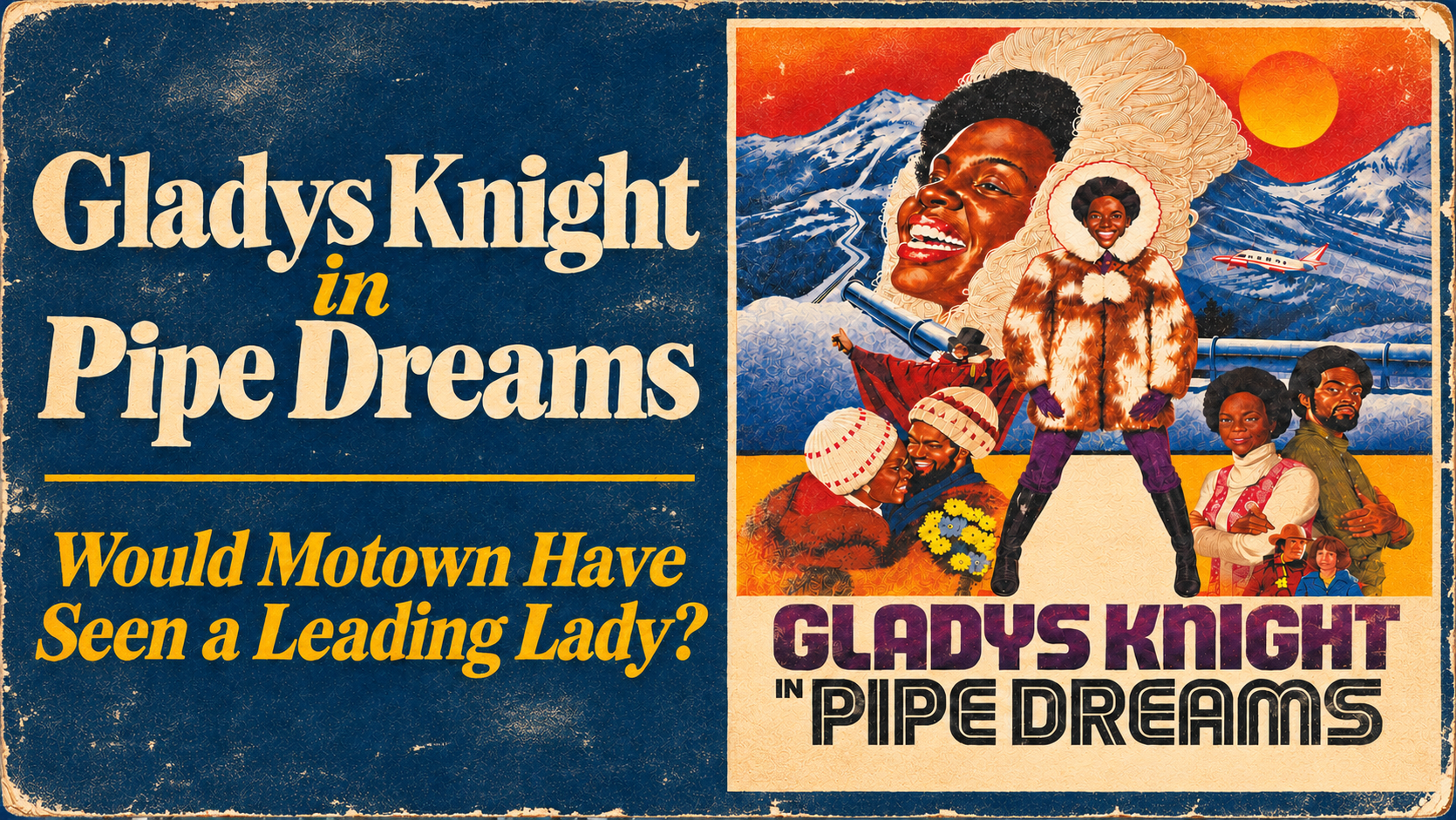
Chasers, this Pipe Dreams poster raises a question that goes beyond the movie itself:
Had Gladys Knight & The Pips stayed with Motown, would Gladys have been given the opportunity to star in her own films?
Would the company have seen her as a potential leading lady?
Whoa—let me slow this down. I know some of you are thinking, “Wait—Gladys made a movie?” Others remember Pipe Dreams quite well. And a few of you who do recall it are already rolling your eyes!
Well… whether this is your first encounter with it or a trip down memory lane, there’s something here worth talking about. Because before we get to whether Gladys was convincing as a leading lady, I wonder: would Motown have even seen her as one?
From Hit Records to a Starring Role
On October 31, 1976—Halloween—Pipe Dreams premiered at Loew’s Grand Theatre in Atlanta. Its 50th anniversary offers a fitting moment to revisit this unusual chapter in Gladys Knight’s career.
The film arrived just three years after the group left Motown for Buddah Records. Already established hitmakers, they had climbed to another level with “Midnight Train to Georgia,” “I’ve Got to Use My Imagination” and “Best Thing That Ever Happened to Me.” Now Gladys was trying something new: a starring film role, opposite her then-husband, Barry Hankerson, in a romantic drama set in Alaska.
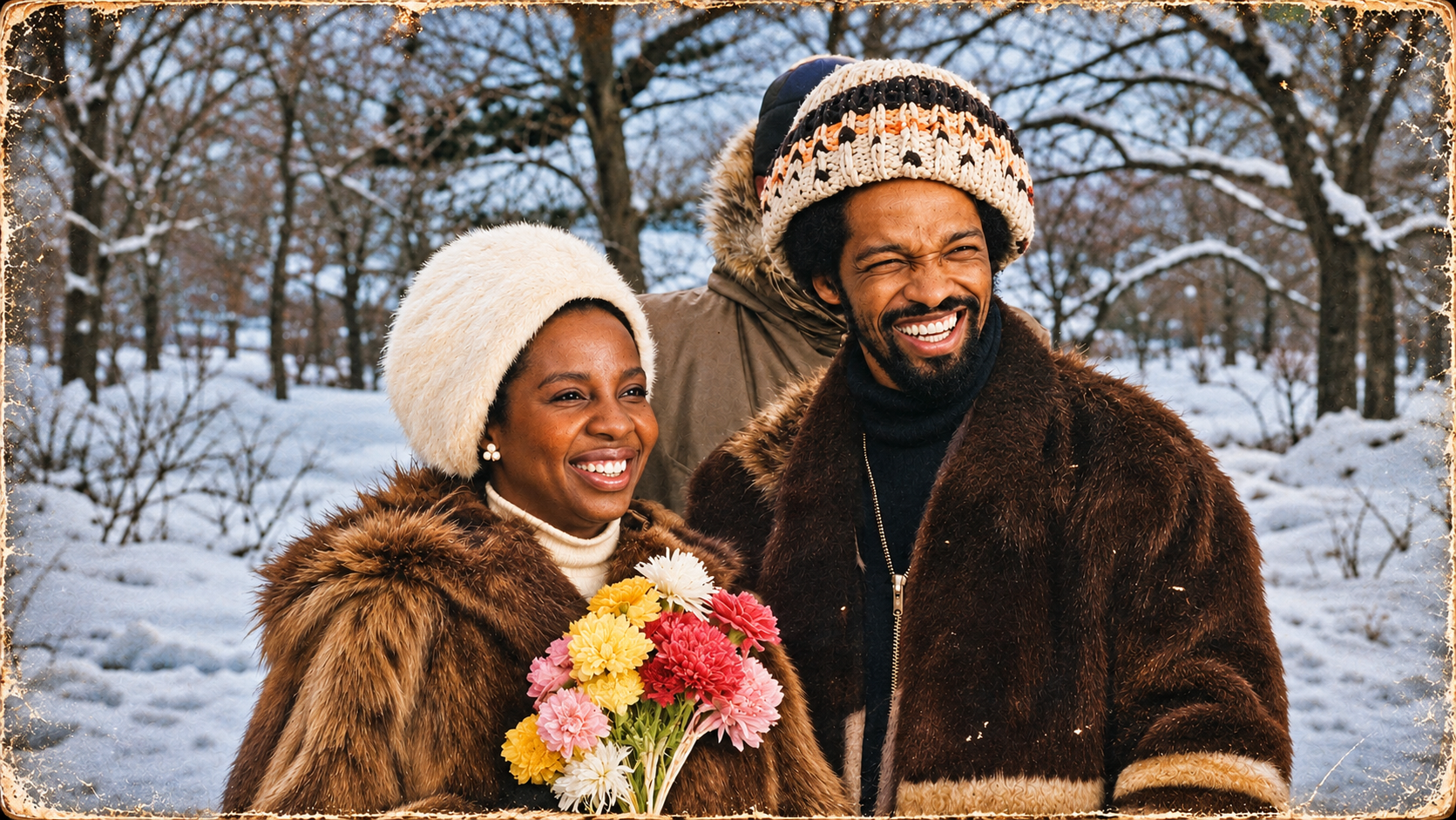
Gladys Knight and Barry Hankerson smile in a snowy setting in Pipe Dreams
The film also gave us a beautiful soundtrack by Gladys Knight & The Pips—a reminder that whatever my reservations about the acting, there is no hesitation when it comes to that voice. Neither the film nor its soundtrack became a major commercial success, but that doesn’t diminish the pleasure of hearing Gladys & The Pips together.
Would Motown Have Made Room?
Pipe Dreams was not a Motown movie. But its arrival makes the comparison interesting.
This was the period when Motown’s Hollywood ambitions were becoming increasingly visible. Mahogany appeared in 1975, followed by The Bingo Long Traveling All-Stars & Motor Kings in 1976, with Scott Joplin and the Smokey Robinson-backed Big Time following in 1977. The company was thinking well beyond hit records.
But whose ambitions would get the backing?
To my eye, Motown could sometimes give the impression that there was room for one person at the very top of a particular lane. One reigning queen. One preferred star. Others might have extraordinary talent, but that did not necessarily mean receiving the same investment in their possibilities.
That is my interpretation, rather than a documented company policy. And with Diana Ross already established as Motown’s leading lady, I have a difficult time imagining Gladys receiving a comparable film vehicle and promotional push.
Possible? Certainly. Likely? I have my doubts.
Levi Stubbs and the Brotherhood
Levi Stubbs offers an interesting connection here. Berry Gordy offered him the role of Louis McKay opposite Diana Ross in Lady Sings the Blues. He declined; Duke Fakir later recalled that there were no roles for his fellow Tops.
Think about that. A chance to step into the movies, and Levi’s concern was what it meant for the other three men.
To me, that speaks to an extraordinary loyalty—a recognition that an individual opportunity could pull him away from something they had built together. That devotion is part of what makes the Four Tops such a beloved unit. The brotherhood mattered.
Gladys the Actress
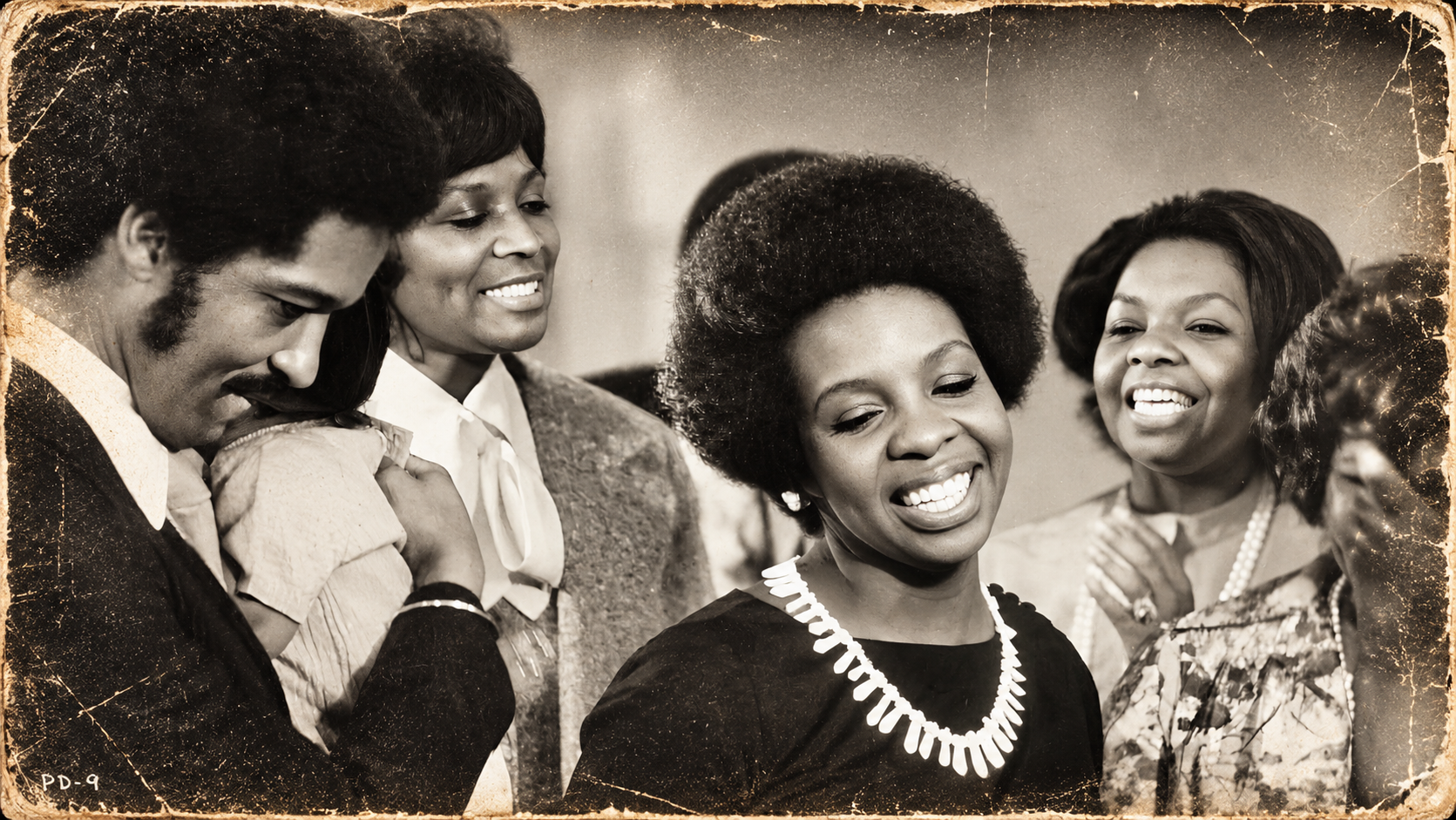
Gladys Knight and Barry Hankerson dance with friends in a scene from Pipe Dreams (1976).
Gladys’s move into film raises a different question: once the opportunity arrived, was acting a natural fit?
Before I offer my opinion, I want to give Gladys credit for taking that chance. Being a magnificent singer doesn’t make stepping onto a movie set easy. Acting asks you to expose a different, sometimes more tender side of yourself, while knowing people will judge the result. I admire her willingness to try.
Watching Gladys in Pipe Dreams, I don’t find acting as instinctive for her as singing. On a record, she can make an entire emotional world believable within a few lines. On screen, I remain more conscious of Gladys delivering a performance than of a character living through a moment.
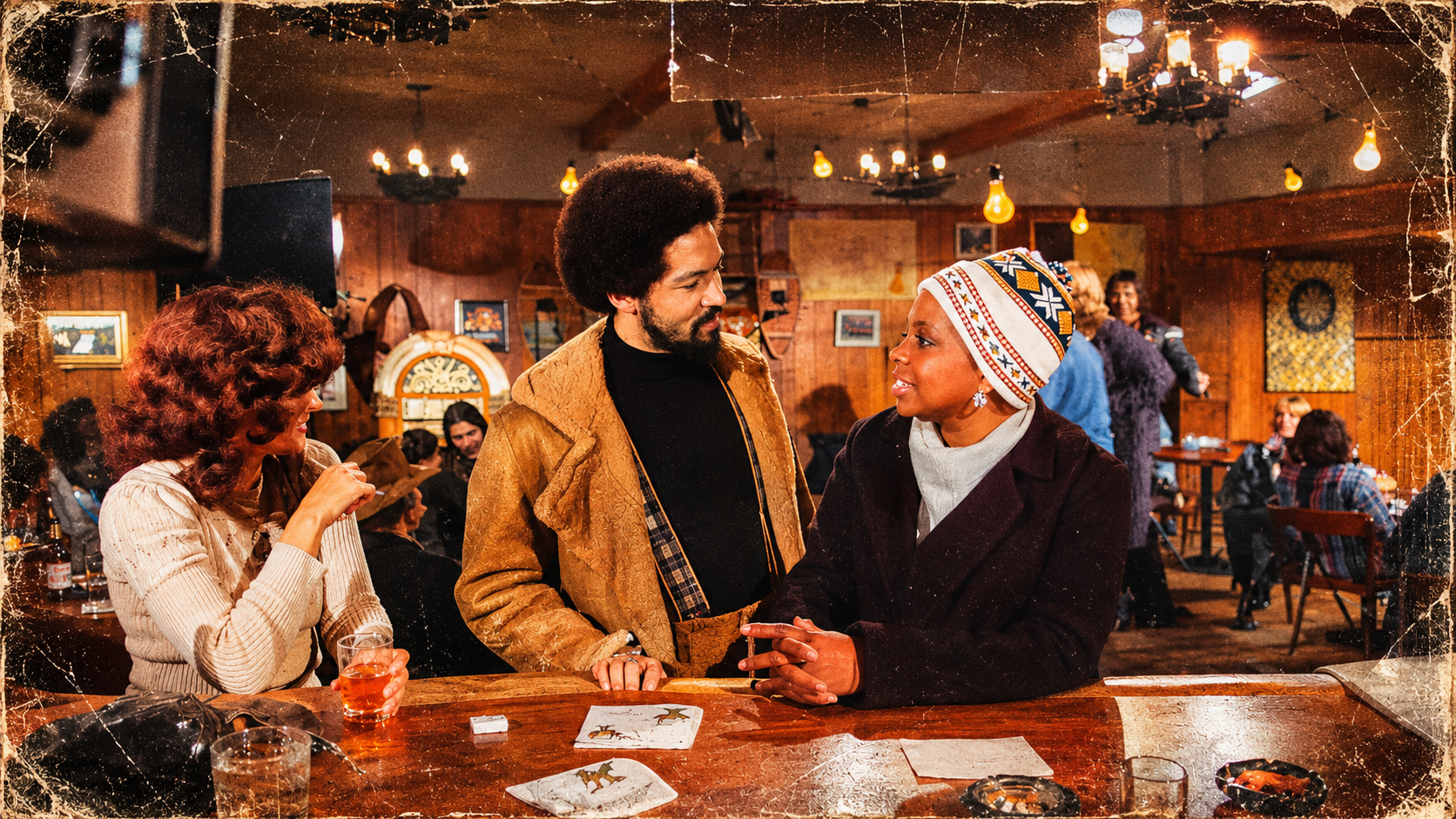
Barry Hankerson and Gladys Knight share a moment at the bar in Pipe Dreams.
There is something so earthy, direct and unpretentious about her. Those are qualities I love in Gladys Knight. But in this performance, as well as others I’ve seen, I feel that her own familiar personality sometimes stands between her and the character.
Acting requires a willingness to inhabit somebody else’s behavior—to embrace the artifice so completely that the audience accepts it as truth. For me, Gladys does not seem entirely comfortable making that leap, but she certainly tries. I don’t know what training she had, but with training, practice and opportunities to develop, I believe she could have become a fine actress in the right roles.
To my eyes and ears, singing was Gladys’s most instinctive gift. Acting presented a different challenge, and while this performance doesn’t always connect for me, I respect the effort and vulnerability behind it. I would have welcomed seeing what more opportunities and the right roles might have brought out in her.
That is my response, and my opinion only. Another viewer may find that same earthiness convincing.
The Music Lives On
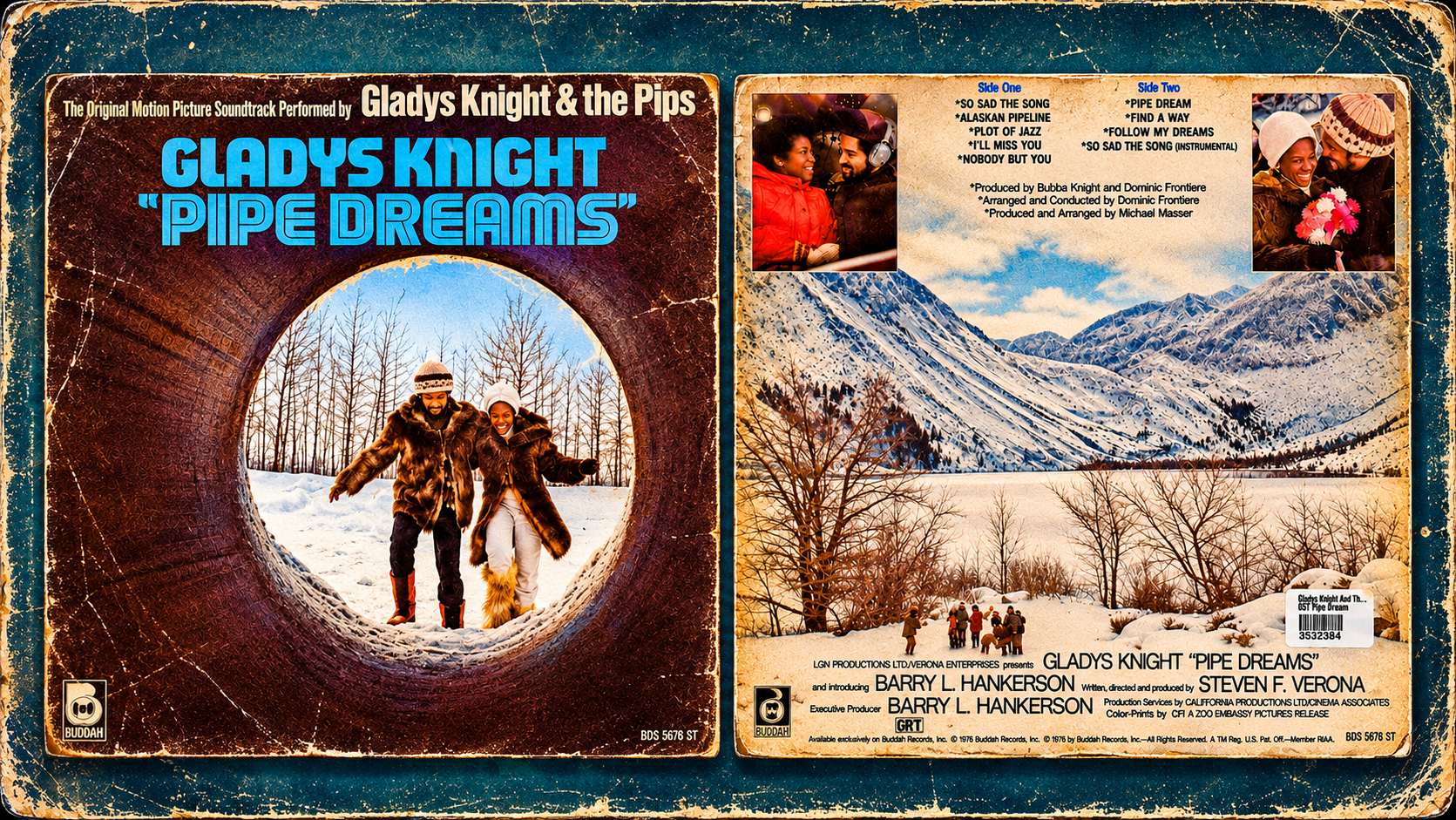
Front and back covers of Pipe Dreams, the 1976 soundtrack performed by Gladys Knight & The Pips and released on Buddah Records.
If this has you curious about the music, there’s also a CD pairing Gladys Knight & The Pips’ 2nd Anniversary and Pipe Dreams—two albums together on one disc, including that beautiful soundtrack.
For anyone drawn to this chapter of their career, it’s another way to explore the music beyond the familiar hits.
A Story Richer for Having It
And that brings me back to the question:
Had she stayed at Motown, would Gladys Knight ever have seen herself on a poster like this?
Whatever my reservations about the film or her performance, I’m glad she made it. Gladys got her movie, and we got this wonderful time capsule of a poster. Pipe Dreams adds another chapter to her story—and I think that story is richer for having it.
Happy 50th anniversary to Pipe Dreams—and thank you, Gladys, for sharing another side of yourself.