
Part One of a Three-Part Chasing Motown Exclusive
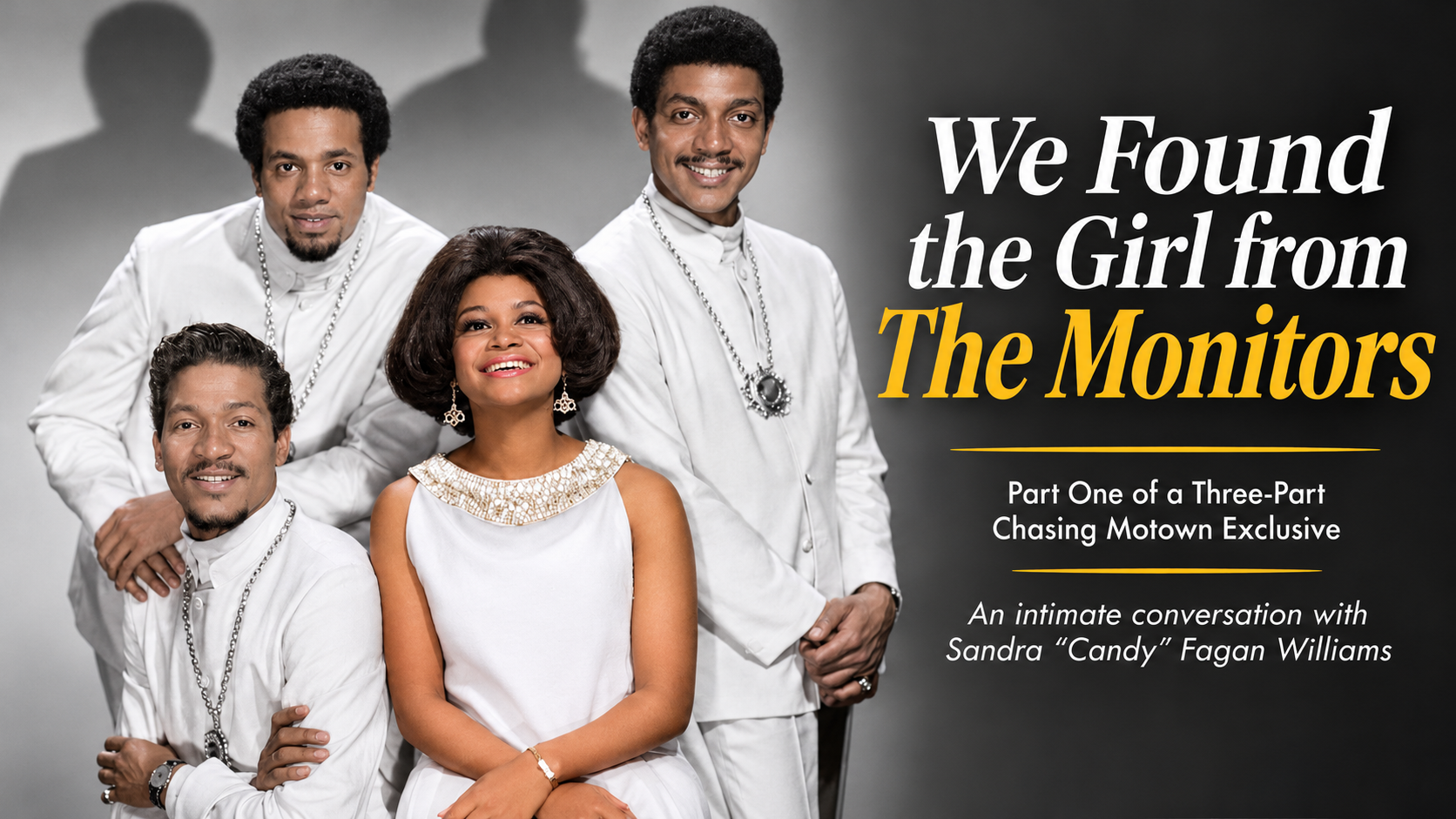
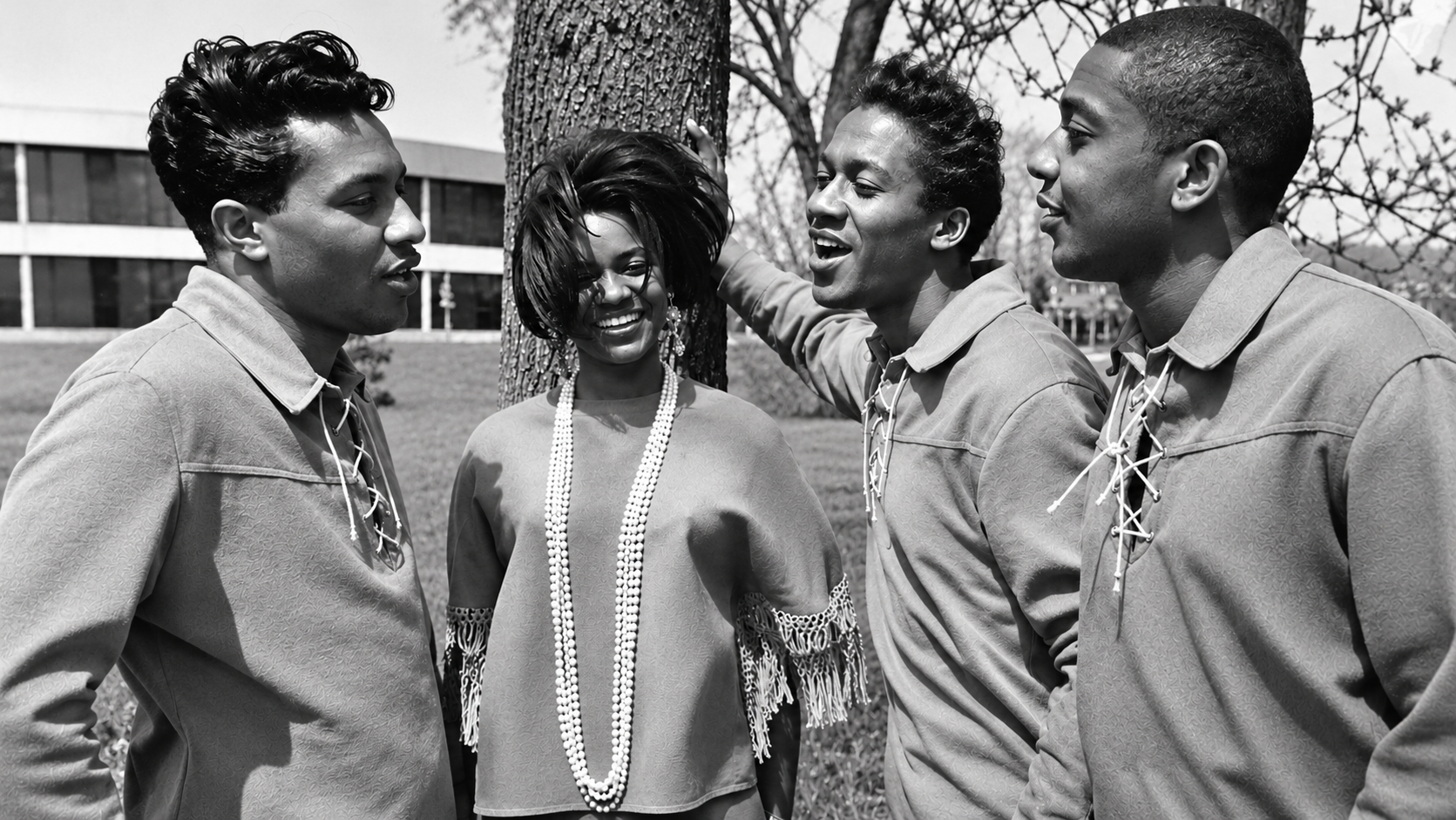
The Monitors: Richard Street, Warren Harris, Sandra “Candy” Fagan Williams, and Maurice Fagan, circa 1968.
For decades, I've wondered what happened to the woman who sang with The Monitors.
Most Motown fans know Richard Street, who later became a member of The Temptations. But what about Sandra “Candy” Fagan, the female voice in the group? Where did she go? What happened to her after Motown?
My fascination with The Monitors goes all the way back to my early years of collecting Motown records.
I was in middle school, and my favorite record store was practically across the street from my school. Needless to say, I practically lived in that place. Every day after school, there I was, digging through records and discovering more of the Motown catalog.
I had heard of The Monitors, but I didn't know they'd released an entire album. One day, I came across a copy of their LP. I didn't recognize the songs, but I was immediately drawn to the album cover and, in particular, the way the group presented themselves.
They had that unmistakable Motown look, but like so many of the label's stars, each member had an individuality that made them stand out. They had presence, personality, and distinctive faces. Nobody seemed to get lost in the group.
Something about them, particularly that lone female member, gave me Miracles vibes.
I was curious. Just not quite curious enough to part with my limited record-buying money.
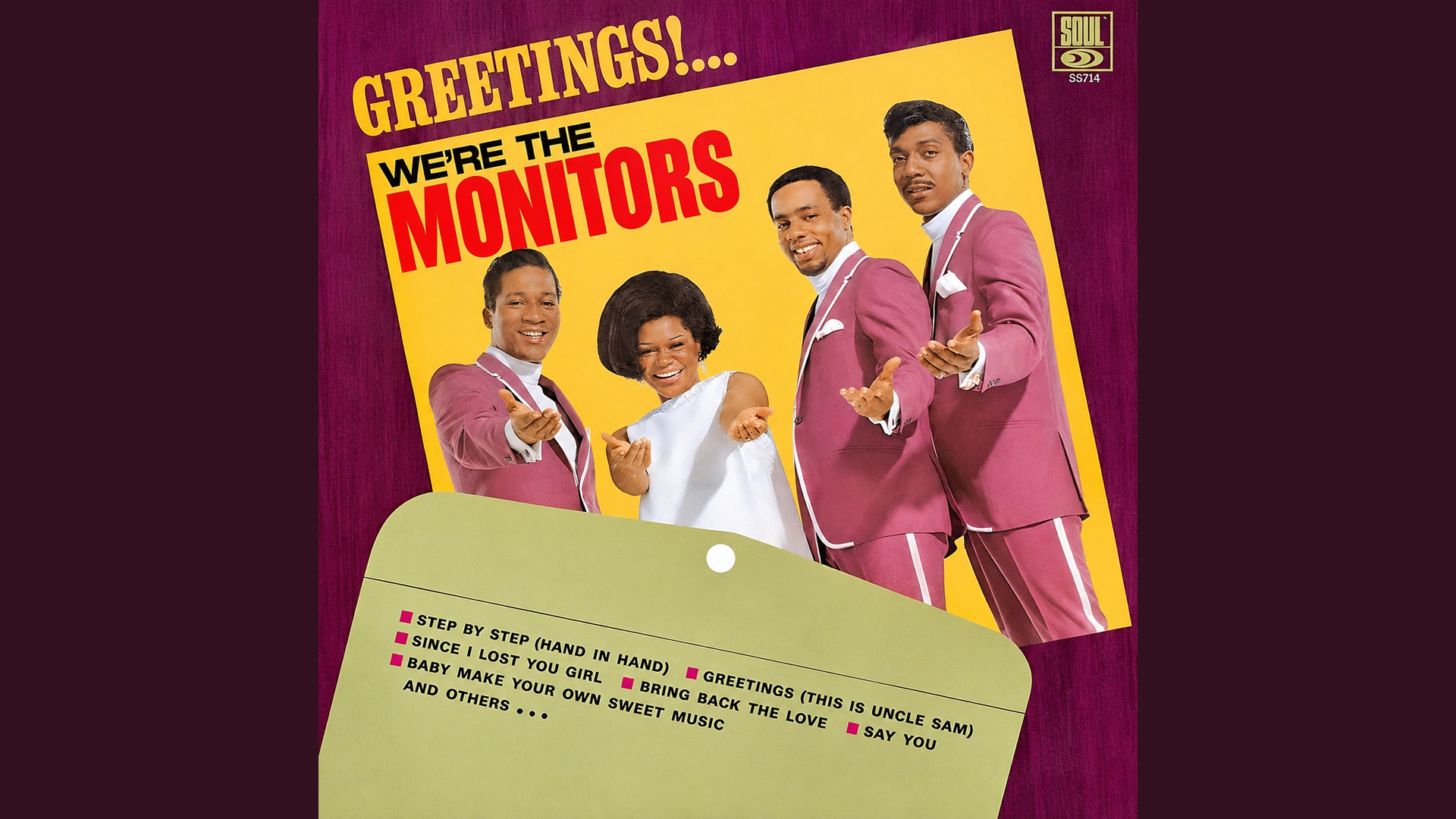
Greetings!... We're The Monitors, the group's debut album, released in November 1968 on Motown's Soul label.
You see, I was still discovering and collecting every Motown anthology I could get my hands on. Any new Supremes discovery immediately took priority. Martha & The Vandellas, the Four Tops, the Marvelettes, and Stevie Wonder were all ahead of The Monitors on my collecting list.
Unfortunately, my budget wasn't nearly as ambitious as my appetite for Motown records.
There was another issue, too. The Monitors album I'd found was a reissue, and back then, I was something of a purist. I wanted original pressings. Reissues simply weren't my thing.
Still, I kept thinking about that album.
Finally, one Saturday, I decided I was going to buy it. No more excuses. I headed out on one of my regular record-store hunts, ready to bring The Monitors home.
And wouldn't you know it?
The album was gone.
It had been sitting there untouched for weeks, and I'd simply assumed it would always be there, waiting for me whenever I finally decided to buy it.
Just like that.
It would be at least another 25 years before I finally got my hands on a copy of The Monitors' LP.
And after all that waiting, what did I eventually have to settle for?
A reissue.
So much for being a purist!
But my curiosity about The Monitors, and especially the woman in the group, never went away.
Nearly 30 years ago, when I met Betty Kelley of Martha & The Vandellas, I remember asking her about Candy. Betty remembered her fondly, but the question remained: Where was she? Betty didn’t know.
As the years passed, The Monitors became one of those Motown curiosities I could never quite shake. I continued collecting their recordings, photographs, advertisements, and anything else I could find about the group.
Yet Candy remained something of a mystery.
Until now.
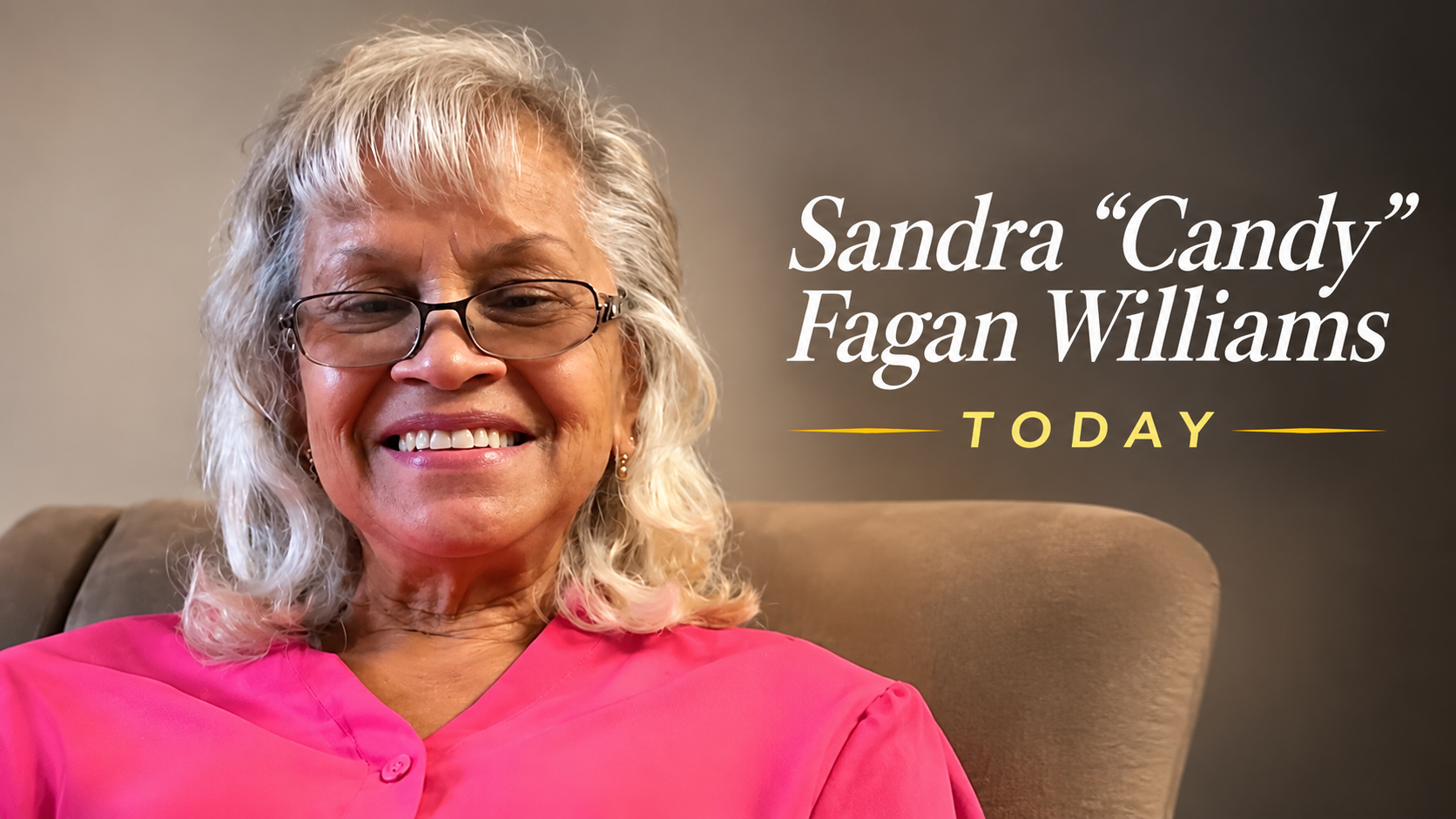
Thanks to a connection made possible by our mutual friend, the one-of-a-kind soul Tanisha Jackson, I finally had the pleasure of sitting down with Sandra “Candy” Fagan Williams—Internet style—for an exclusive Chasing Motown conversation.
What followed was far more than a discussion about records. Candy took me back to Detroit, her childhood, her earliest musical experiences, and the extraordinary day The Monitors auditioned for Berry Gordy in his own living room.
And as you'll discover, Candy has a special story to tell.
This conversation has been lightly edited for grammar, clarity, and length. Candy's recollections, expressions, and uncertainties have been preserved.
A Detroit Girl with Music in Her Heart
CHASEY: Miss Candy, tell me a little bit about the early years. Where did you grow up? What was your family life like?
CANDY: I was born and raised in Detroit, Michigan, and my family life was beautiful. It was my mother, Elizabeth G. Bell, a great missionary, and three of us girls: Denise, Lorraine, and myself. I'm the oldest.
We moved quite a bit in Detroit. We lived on Dexter, Joy Road—you name the streets, we've been there! The east side, St. Albans, Boston, all over Detroit.
You know how it is with a single mom and three girls. We had it pretty rough, but the Lord was always in the plan. My mother taught us that.
We joined the Church of God in Christ on Cameron Street, across from where we lived. I was 11 years old.
I remember when I was baptized. There were 12 of us in a line, and the pastor, Elder Mills, said, “I got this one. This one's anointed.”
I never knew what that meant, but it has stuck with me for years.
We had a very happy life. We had some sad times too, growing up with poverty, but God kept us together.
I've always sung, from the time I was a little girl.
CHASEY: Do you remember how or when music became a part of your life?
CANDY: My mom used to always have us singing together in harmony. My youngest sister, Lorraine, she's a great singer, and Denise was our praise dancer.
Mom would get us together and call us her “Bell Queens,” the three of us.
We sang in church, in the choir, and I was active in the school glee clubs. At Dwyer School, I was one of the lead singers. I remember that as a young girl.
I've always sung from a young age, three years old, all the way up. I love music.
CHASEY: Were your sisters singers too?
CANDY: Lorraine was. My younger sister could sing! To me, she was like another Dionne Warwick. She could sing soprano and everything.
Denise was always the dancer.
Our dad bought us one of those little record boxes. We'd put on records and sing along with them. You know how we used to do when we were young.
Jamie, you're not that young, but you're not that old!
I've always loved singing. It was a part of my life.
Before The Monitors: The Ultimate Soul
CHASEY: Before joining The Monitors, you were in a girl group, right?
CANDY: Yes, The Ultimate Soul. I named us!
CHASEY: Was Shirley Harris, Warren Harris's wife, in that group?
CANDY: Yes, Shirley Harris. That's right.
Shirley and I were very close. Very close. Her sisters and all of us were very close.
Eventually, we added Jackie Perkins to our group. Jackie was Paul Williams' son's mother. Paul Williams of The Temptations.
We were all close growing up, you see. It was exciting for us.
CHASEY: Did The Ultimate Soul ever perform at record hops, shows, or talent contests?
CANDY: We appeared a couple of times, as I remember, in talent shows. I think one was at Dwyer School, before we went to Central.
The girls and I would get together and sing.
As we got older, our mothers allowed us to get an apartment together, not far from them, because we were a little fast!
We did our thing, you know!
CHASEY: There's something I wanted to clear up because it's been repeated in accounts of The Monitors' history. Some fans believe that you and Maurice Fagan performed as a husband-and-wife duet called The Fagans before joining The Monitors. Is that true?
CANDY: No, uh-uh. No, it wasn't. We were in The Monitors.
CHASEY: So there was no husband-and-wife duet before The Monitors?
CANDY: Not prior to that.
CHASEY: There's also a story that members of The Distants and The Majestics came together under The Majestics name. Does that sound right to you?
CANDY: Yes, it sounds right. However, I don't remember exactly how we got together like that.
Maurice became friends with Warren. I believe that's how the connection came about.
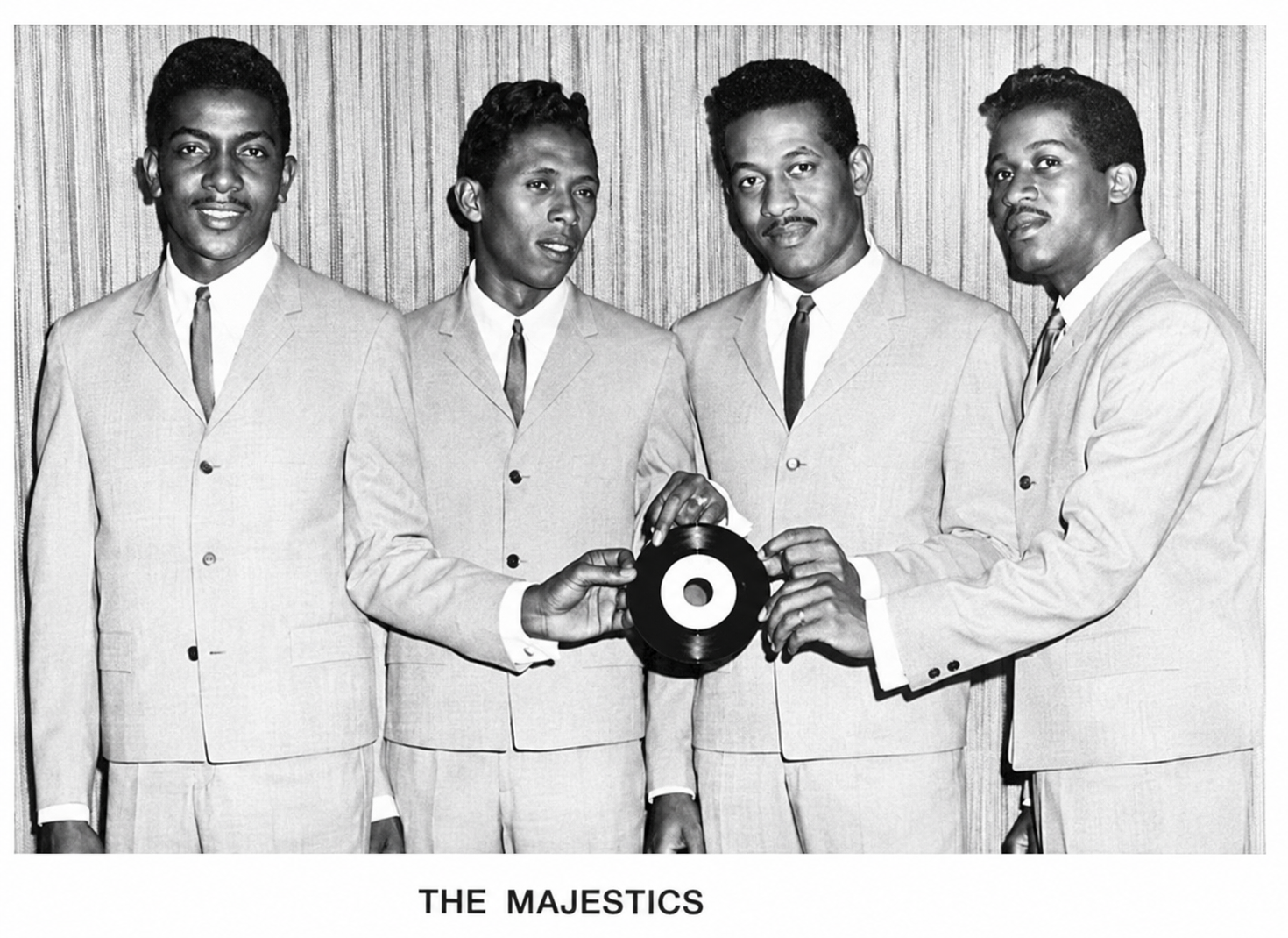
The Majestics, featuring Maurice Fagan and Warren Harris, circa 1961–1962, before their transition to Motown's The Monitors.
From The Majestics to The Monitors
CHASEY: What do you remember about the group becoming The Monitors? Did the name change happen at Motown?
CANDY: Yeah, it did. It happened at Motown.
We had the name The Majestics, but I think Berry Gordy had a lot to do with our name becoming The Monitors, from when we went over to his house.
That's where we first auditioned.
CHASEY: Now, that's a story I really want to hear. Take me back to the day you auditioned at Berry Gordy's home. What do you remember?
CANDY: Oh, that was exciting for us!
Richard Street got the call for us to come over to Berry Gordy's. I don't remember where I was when we got the call, but we were excited about that.
We got over there, and Berry Gordy was there with his wife. Mickey Stevenson was there. I remember him.
I really believe Smokey and Claudette were there too.
We had made up a routine ourselves. It was just something we'd been doing locally.
And Berry asked us right then, “You did this yourself?”
We told him yes, and he seemed to be pleased with us.
We felt so honored.
He asked us to do it twice. I remember that. He said, “Can you do that again?”
He asked somebody to come into his living room to watch us do the routine again.
CHASEY: You mentioned Berry Gordy's wife. Do you remember whether that was Raynoma Gordy, whom everyone called Miss Ray?
CANDY: I'm not sure. But I know one of his sisters was there.
Marvin Gaye was there too. I forgot to mention him.
Marvin was very encouraging to us. He and Smokey were very encouraging.
The Gordys were so beautiful to me. Claudette was a beautiful person toward me too.
And Maxine Powell kind of took me under her wing. Of course, she did that for all of us, but I felt very close to her.
Harvey Fuqua was very nice to us too. I remember him.
So many of them were so nice to us.
The First Steps Into Hitsville
CHASEY: After the audition at Berry Gordy's house, what happened next? Did you have to sign agreements before going into the studio?
CANDY: Yeah, we had to go sign papers first.
Then, as I remember correctly, one of the producers called us and had us come in. They had a song for us.
It was either “Say You” or “Greetings (This Is Uncle Sam).” It may have been another one.
Smokey had written a song for us too. I remember that.
And that's how we met Robert White and those guys playing, you know, and they had us do the backgrounds.
CHASEY: According to the liner notes of The Monitors' anthology, the first song you recorded at Motown was “The Further You Look, the Less You See,” credited to Norman Whitfield. Do you remember that session?
CANDY: I vaguely remember that, yes.
You know, it's been years for me, but I vaguely remember it.
We were pretty busy, weren't we?
We were pretty busy for not being recognized enough, to me.
CHASEY: And Norman Whitfield was a big part of The Monitors' recordings?
CANDY: He was a big part of us. Norman Whitfield was right there when we did our recordings.
Berry would drop in there too.
Norman Whitfield, Lamont Dozier—I remember them.
CHASEY: What was the atmosphere like when you actually walked into Hitsville for the first time?
CANDY: Oh, my goodness!
We were excited when we first went to Hitsville. We were a little intimidated, but we were excited.
I remember talking to my husband Maurice. I said, “You know, this is really frightening.”
When we first walked into Hitsville, we were so awed by all the stars. We were so excited about meeting them.
We didn't think of ourselves as being part of all that. We didn't place ourselves there.
But they helped us place ourselves right there with them, because they were like family.
Motown was like a family to us.
We met Marvin Gaye and his wife Anna Gordy, and all of the Gordys. They were really supportive.
We met Martha Reeves, Smokey, so many of the Motown stars.
Then Norman Whitfield, Lamont Dozier, Smokey, and the others began getting songs together for us.
Going into that studio for the first time—man, that was awesome!
CHASEY: And you remember seeing Stevie Wonder there too?
CANDY: Stevie Wonder was there. He was just walking around, and that's another one who was very supportive.
He wasn't even 16 yet when we got there.
He was right there, saying, “So you're the new Monitors? So you're the new group?”
I told my husband, “That's Stevie!”
And then there was Smokey coming in and out.
It was a blast meeting all of them. They treated each other so warmly. It wasn't what we expected.
The atmosphere was really warm. We enjoyed meeting them.
Coming Up in Part Two
Candy's memories of Motown don't stop at the studio door.
In our next installment, she recalls the extraordinary friendships she formed at Hitsville, the stars who became part of her extended family, and the stories that unfolded when the music stopped.
Among them: a young Stevie Wonder who could recognize Candy without ever seeing her, a surprising night when she stepped into the shoes of a Vandella, and her deeply personal memories of her close friend Florence Ballard.
And then there's the question of what really happened behind the scenes of The Monitors' live performances.
There's much more to come.
To be continued in Part Two of our exclusive conversation with Sandra “Candy” Fagan Williams.
Chasing Motown is an independent platform dedicated to preserving, exploring, and celebrating Motown history and the people who made it.
Chasey — The Motown Specialist
