
How Mary Wells, Smokey Robinson, and a 13-year-old Carolyn Crawford helped make Motown a name worth fighting for.
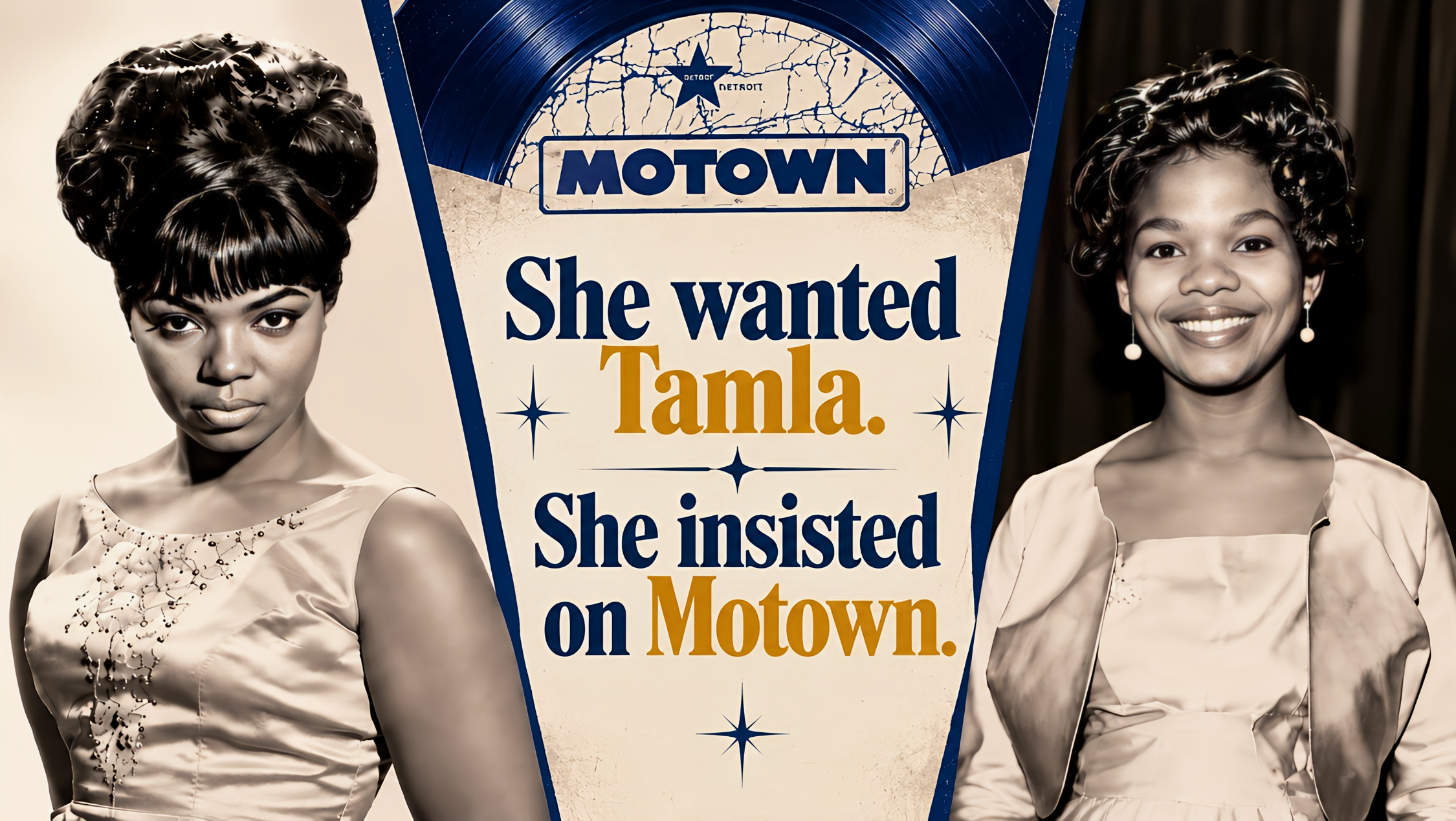
TWO SINGERS, ONE MOTOWN:
THE MARY WELLS–CAROLYN CRAWFORD STORY
TODAY IN MOTOWN HISTORY • OCTOBER 29, 1962–2026
How Mary Wells, Smokey Robinson, and a 13-year-old Carolyn Crawford helped turn a little Detroit record label into a name everybody wanted to be associated with.
Mary Wells didn't want to be on Motown.
Carolyn Crawford wouldn't settle for anything else.
Same record company. Same Berry Gordy. Two young singers, separated by just a few years, with completely opposite opinions about which record label they wanted their names on.
Somewhere between those two conversations, something remarkable happened.
Motown became MOTOWN.
And Mary Wells had quite a bit to do with it.
OCTOBER 29, 1962: TWO LOVERS, ONE REMARKABLE YEAR
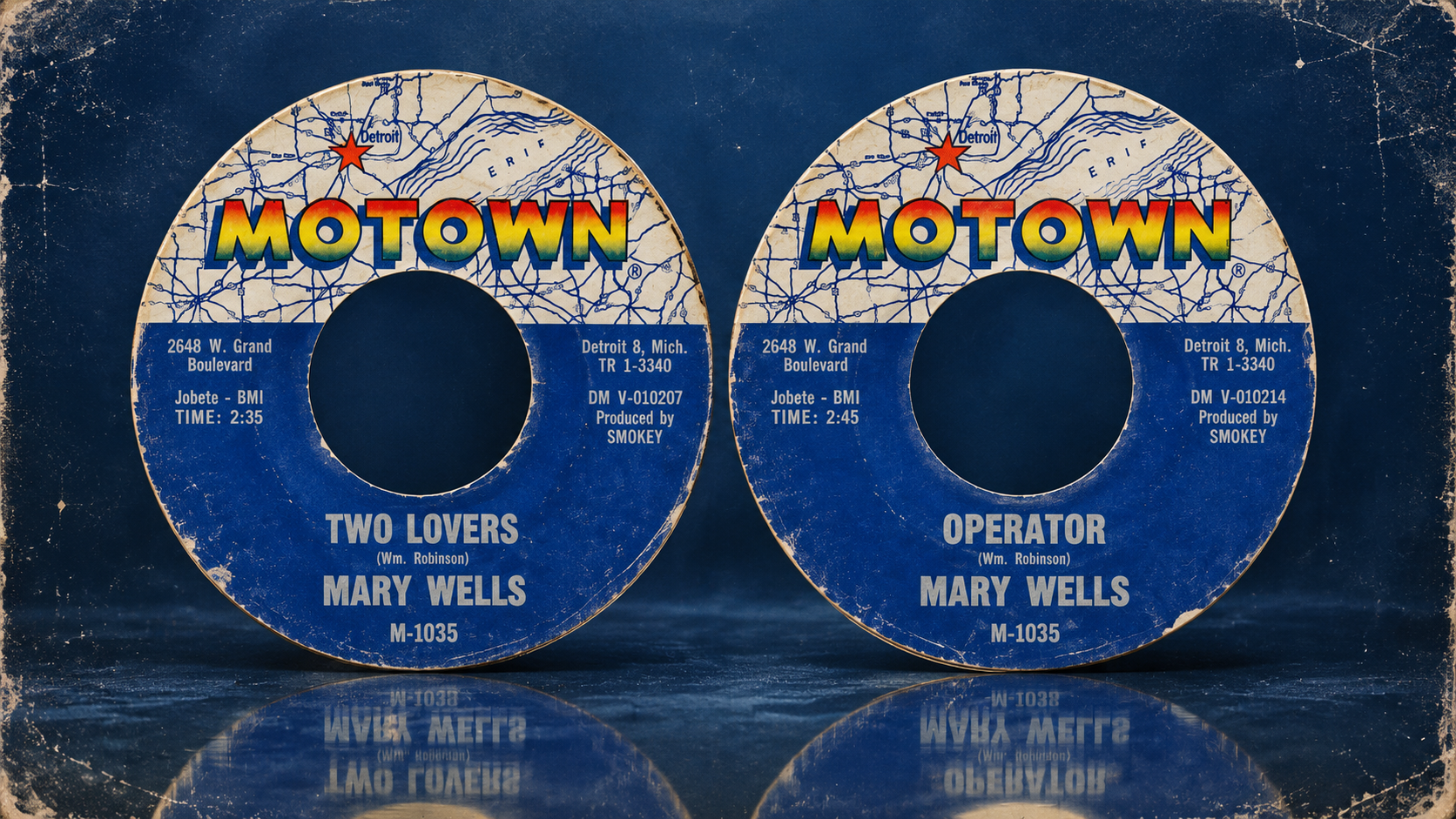
On October 29, 1962, Motown released Mary Wells' "Two Lovers," backed with "Operator."
Written and produced by Smokey Robinson, the single would become Mary's third consecutive Top 10 pop hit, following "The One Who Really Loves You" and "You Beat Me to the Punch."
"Two Lovers" reached No. 7 on Billboard's pop chart and No. 1 R&B.
Not bad for a young woman who initially thought she'd been assigned to the wrong record label!
And the song itself was pure Smokey Robinson ingenuity.
Mary sings about two lovers. One is sweet and kind. The other makes her miserable. But just when you think you've figured out her romantic predicament, she reveals that both lovers are actually the same man.
A clever little musical twist delivered with Mary's unmistakable charm.
By the end of 1962, Mary Wells wasn't simply enjoying a successful recording career. She was helping establish Motown as a label capable of producing major national hits.
And the man behind those songs was becoming increasingly important to the company's future.
MARY WELLS AND THE SMOKEY ROBINSON CONNECTION
Smokey Robinson was already a successful recording artist and songwriter with the Miracles, whose records appeared on Tamla, Motown's older sister label.
But his work with Mary Wells demonstrated something else.
He could write hits for somebody other than himself.
And not just any hits.
Smokey seemed to understand Mary's voice, her personality, and the playful sophistication she could bring to a lyric.
"The One Who Really Loves You," "You Beat Me to the Punch," and "Two Lovers" weren't simply three successful records. They represented a creative partnership that helped establish Mary as one of the country's leading female pop and R&B stars.
For Smokey, those records helped strengthen his reputation as a songwriter and producer whose talents extended well beyond the Miracles.
And for Motown, they gave the relatively young label something invaluable.
A star.
"I WANNA BE ON TAMLA, NOT MOTOWN!"
Here's where the story takes an unexpected turn.
In a revealing interview, Mary Wells recalled her disappointment when she learned she would be recording for Motown instead of Tamla.
"I wanna be on Tamla, not Motown. There's nobody on Motown."
And at the time, she had a point.
Tamla had come first, launched by Berry Gordy in 1959. The Miracles were recording for Tamla, and Barrett Strong's "Money (That's What I Want)" had helped put the young company on the map.
Mary wanted to be on Tamla. That's where the Miracles, Barrett Strong, and the hits were. Why would she want to be on a label nobody knew?
Mary recalled being the first artist on the Motown label and, for a time, its only artist.
She wanted to be where the action was.
What she couldn't have known was that she was about to help create some of that action herself.
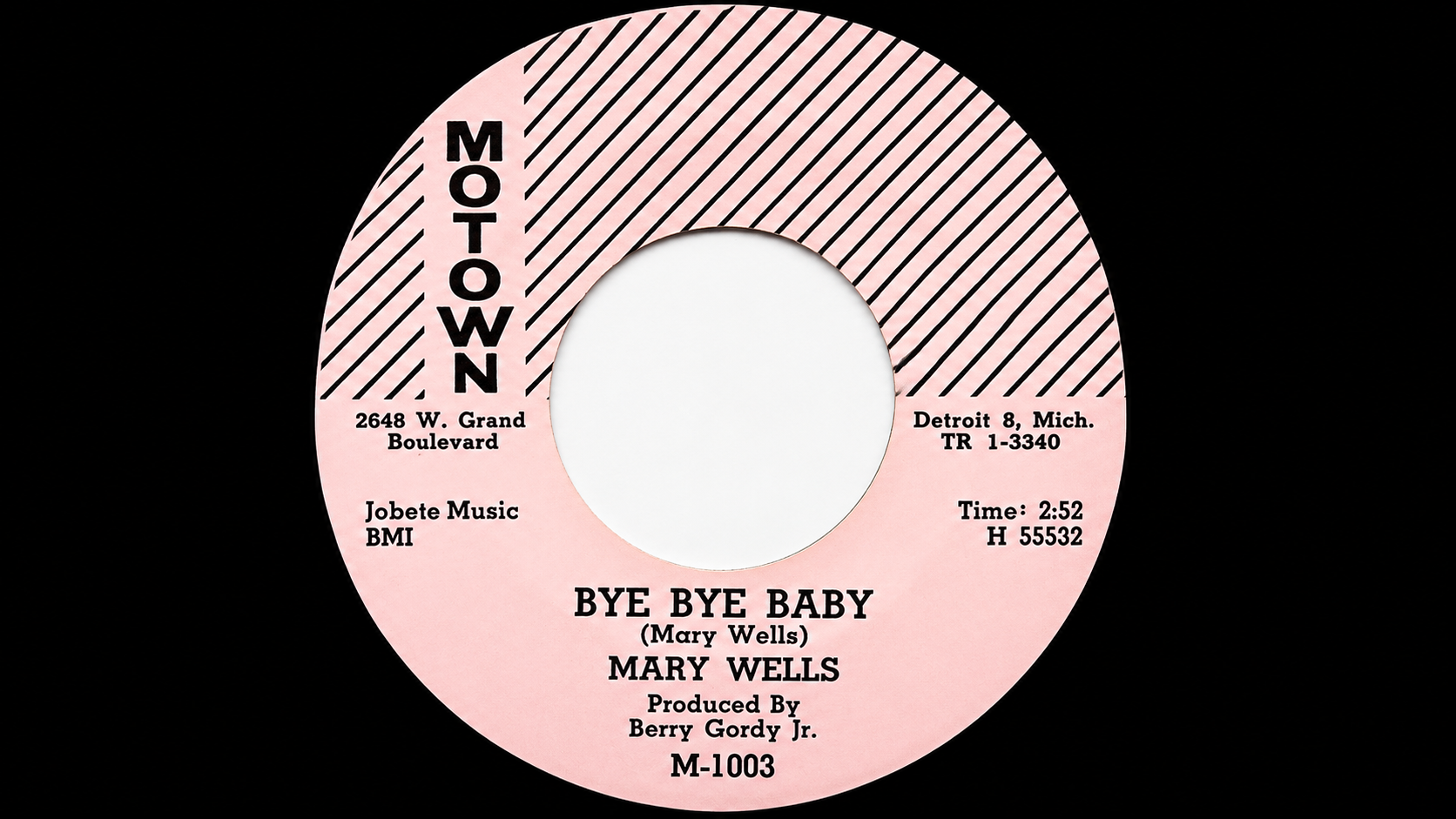
Her debut hit "Bye Bye Baby" had already introduced her name—and the Motown label—to record buyers in 1960.
Then came the Smokey Robinson hits.
And with every successful record, the name printed on those familiar blue-and-silver Motown labels became a little more recognizable.
Mary Wells wasn't simply making records for Motown.
She was helping make Motown a name.
A 13-YEAR-OLD GIRL WITH A DREAM
Now, here's where things get especially interesting.
While Mary Wells was helping establish Motown as a nationally recognized label, another young Detroit singer was paying very close attention.
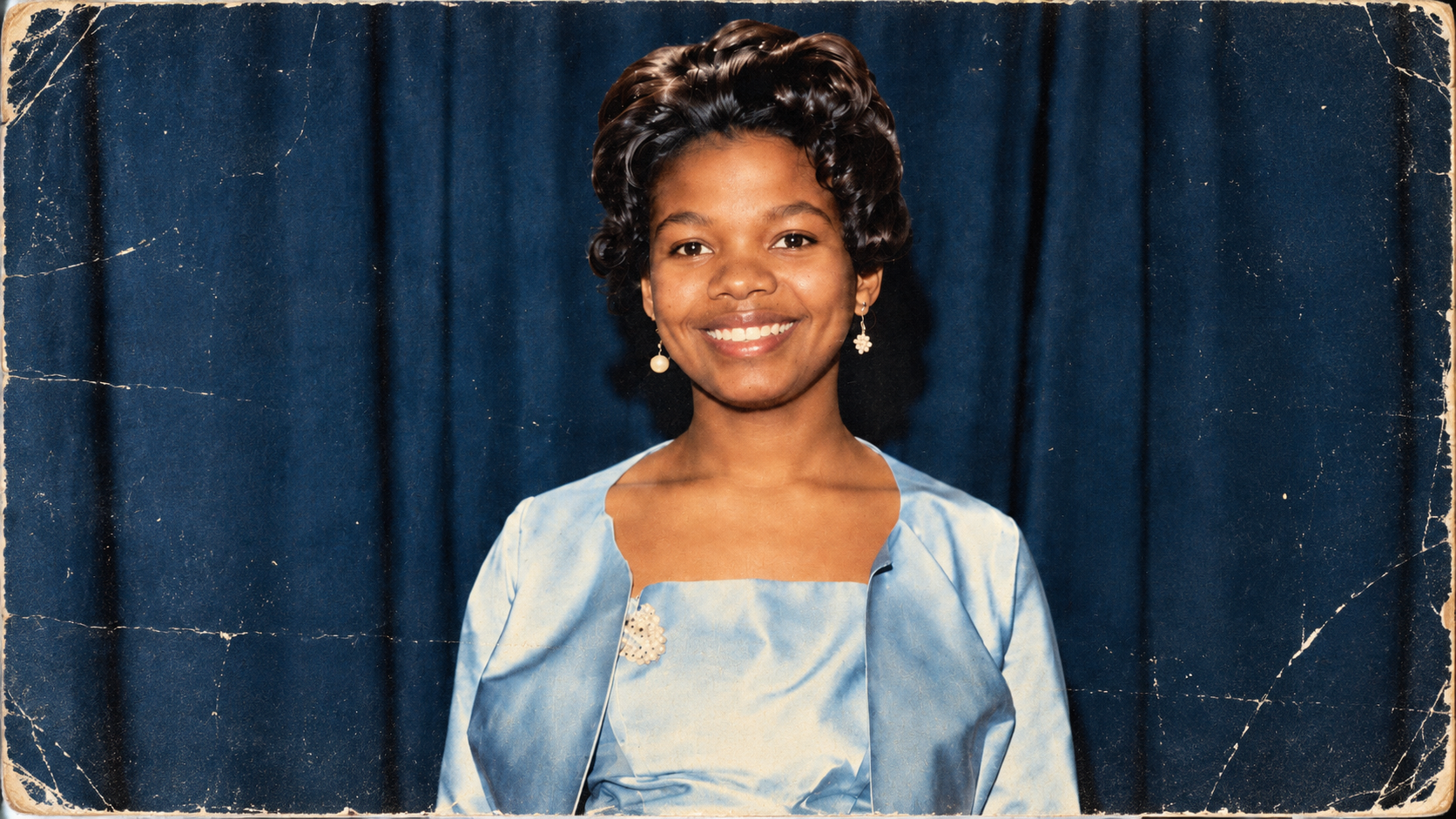
Her name was Carolyn Crawford.
And Mary Wells was her teenage idol.
There was only about six years between them, but at that age, six years could seem like a lifetime.
Mary was already a young woman, a nationally recognized recording star with hit records, television appearances, and a successful partnership with Smokey Robinson.
Carolyn was just 13, still living at home with her family, watching and listening as Mary Wells became one of the biggest names to emerge from Detroit.
To Carolyn, Mary wasn't simply another singer on the radio. She represented something Carolyn dreamed of becoming herself.
And there was another attraction.
Mary was recording for Motown.
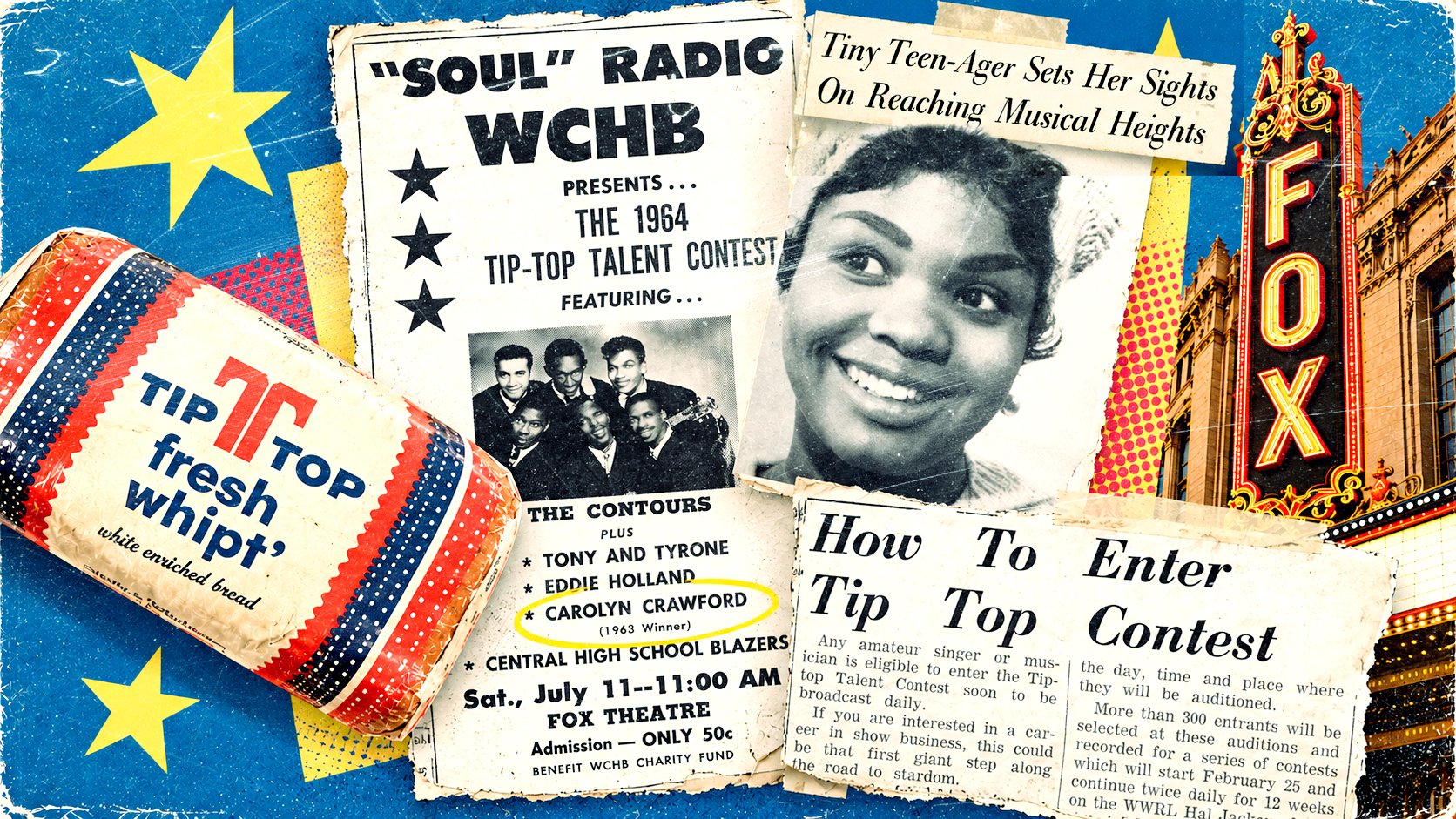
BREAD WRAPPERS, MARY WELLS, AND THE FOX THEATRE
Yes, bread wrappers.
The competition was associated with Tip Top Bread, WCHB radio, and Motown Records.
To participate, contestants had to collect wrappers from Tip Top bread loaves.
Carolyn recalled that she and her mother gathered wrappers wherever they could, including visits to the local five-and-dime.
It was an unusual beginning to a recording career, but Carolyn was determined.
For her competition entry, she selected "Operator," the B-side of Mary Wells' "Two Lovers."
Think about that for a moment.
A song released just over eight months earlier was now helping another young Detroit singer pursue her own dream of recording for Motown.
And Carolyn wasn't finished borrowing inspiration from Mary.
After advancing to the finals at Detroit's famous Fox Theatre, she selected another Mary Wells recording.
"Laughing Boy."
But she didn't simply sing it.
Carolyn accompanied herself on piano and added an extra verse she'd written herself.
Imagine being 13 years old, sitting at a piano in the Fox Theatre, performing a hit associated with your favorite singer—and deciding to improve upon it with your own lyrics!
And there was something Carolyn didn't know.
One of the judges was Berry Gordy himself.
The man whose company had recorded Mary Wells' original version was sitting there listening to this young girl perform it with a verse he'd never heard before.
Carolyn won first prize.
According to her recollection, the prizes included $500, a Longines watch, and a four-year recording contract with Motown.
Not bad for a young lady whose journey had begun with bread wrappers!
But the most interesting part of this story was still to come.
THREE REQUESTS FOR MR. GORDY
Following her victory, Berry Gordy visited Carolyn's family home.
Carolyn later recalled that she and her mother were invited to Motown's studios for a conversation with him about her future.
Gordy discussed his plans for the young singer and expressed enthusiasm about her talent and stage presence.
But Carolyn had a few ideas of her own.
Three, to be exact.
And remember, Chasers, we're talking about a 13-year-old girl sitting across from the founder of Motown Records.
Her first request?
No name change needed.
No newly invented show-business identity.
She wanted to be Carolyn Crawford.
Her second request?
She wanted to record a song she'd written herself.
Gordy was willing to listen.
And her third request?
She wanted to record on the Motown label.
Not Tamla.
Not Gordy.
Not one of the company's other imprints.
MOTOWN.
The label with the map!
Now, wait a minute.
Doesn't that sound familiar?
Just a few years earlier, Mary Wells had complained that she wanted to record for Tamla because nobody was on Motown.
And here was a 13-year-old girl specifically asking Berry Gordy to put her records on that very label.
The label Mary didn't want had become the label Carolyn wanted most.
And according to Carolyn, Gordy agreed to all three requests.
That's a remarkable turnaround in a relatively short period.
And all at the request of a 13 year old.
And it tells us something about the influence Mary Wells was having on young singers who were watching her success.
Carolyn wasn't simply admiring Mary's songs.
She wanted to follow her onto the same record label.
A LIMOUSINE AT MIDNIGHT!
Now, here's another detail I particularly love about Carolyn's story.
Her first Motown recording session wasn't exactly an ordinary teenage outing.
According to Carolyn's recollection, around the time of her 14th birthday, a limousine arrived at her home close to midnight to take her to Hitsville U.S.A.
Imagine that!
One minute you're a Detroit teenager living at home with your family.
The next, a limousine is waiting outside to take you to a recording session at Motown!
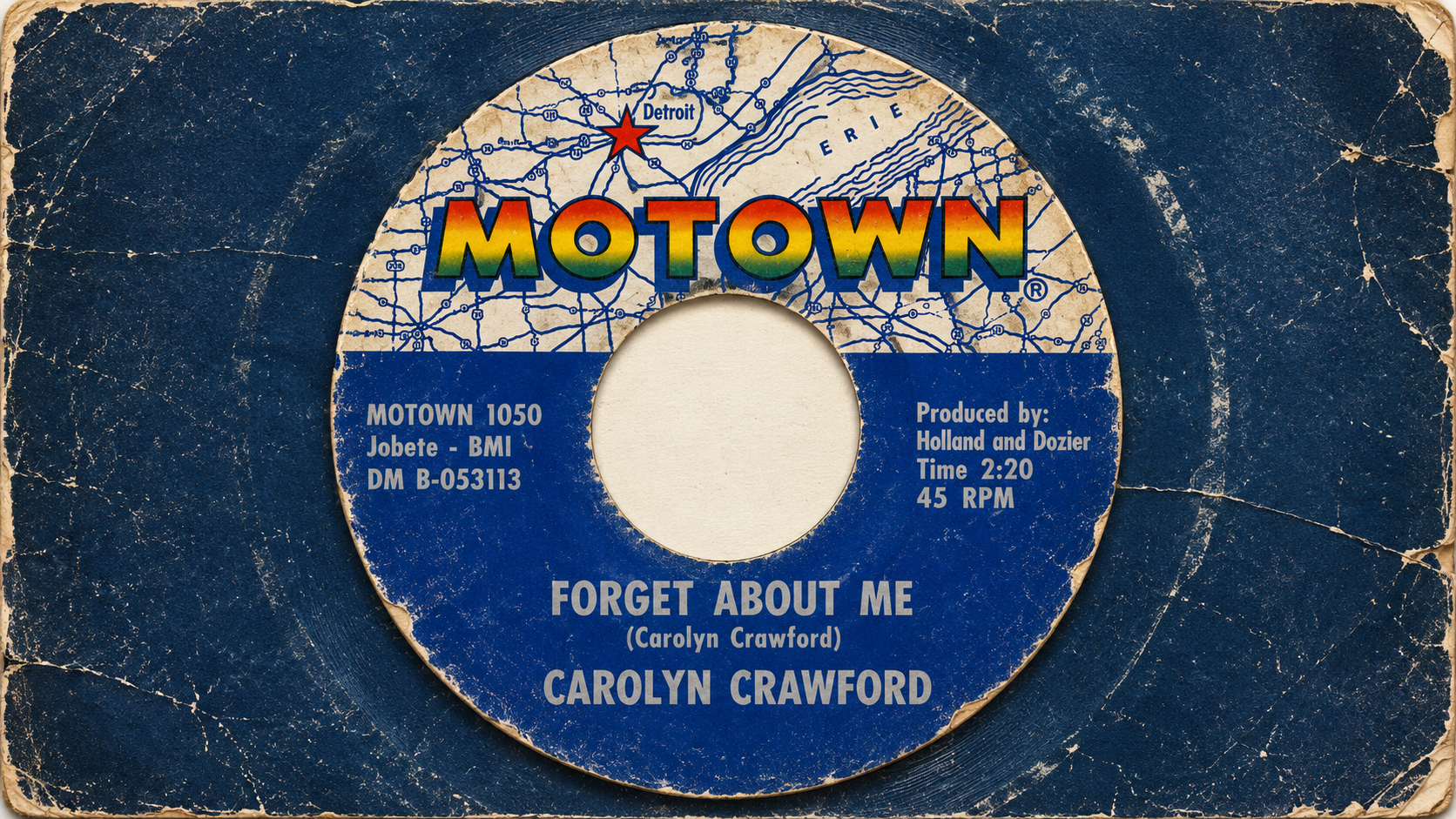
Carolyn remembered recording her composition "Forget About Me" and returning home by approximately three in the morning.
The song became her debut Motown single in 1963, backed with "Devil in His Heart."
And yes, the record appeared on the Motown label.
Just as she'd requested.
There's something wonderfully fitting about that.
Mary Wells had helped make the Motown name desirable, and now Carolyn Crawford was recording for that same label with a song of her own.
The girl who had once been told she was too young to pursue an opportunity at Motown was now a Motown recording artist.
And she was still only 14.
CAROLYN CRAWFORD: MORE THAN A TALENT CONTEST WINNER
Carolyn's debut didn't turn her into an overnight national star. But it did establish her place as one of the cherished icons of Motown's golden era.
Her time at Motown may have been brief, but she left behind recordings that continue to delight collectors and fans of the company's classic sound.
Among them is the unforgettable "My Smile Is Just a Frown (Turned Upside Down)," a recording that bears the unmistakable influence of Smokey Robinson, who also produced the session. The songwriting credit is especially intriguing, bringing together Robinson, Mickey Stevenson, and Janie Bradford — three of the creative forces behind the Motown sound whose names rarely appeared together on a single composition. Just how much each contributed is difficult to say, but what a treat it must have been for 14-year-old Carolyn to have a record written and produced by Smokey, who was already a celebrated songwriter, producer, and recording star! More than six decades later, the song remains one of her signature recordings and a treasured piece of Motown history.
And there's another connection worth noticing.
Smokey Robinson had played such an important role in Mary Wells' breakthrough.
Now his songwriting was part of Carolyn Crawford's Motown story, too.
Carolyn also recorded "When Someone's Good to You (It's So Easy to Be Good to Him)," another example of the sophisticated material being developed at Hitsville during this period.
These weren't the records that made Carolyn a household name.
But they revealed a young vocalist with a distinctive voice, remarkable confidence, and musical abilities that went well beyond her years.
For Motown collectors, Carolyn's recordings remain a fascinating part of the label's early history.
And for our story, they demonstrate that Carolyn's three requests weren't merely the wishes of an ambitious child.
She really did become a Motown recording artist.
She kept her name.
She recorded her own composition.
And she got the label she wanted.
COULD CAROLYN HAVE FOLLOWED MARY WELLS AS MOTOWN'S LEADING LADY?
And just when you think the Mary Wells–Carolyn Crawford connection has come full circle, there's another chapter.
In 1964, Mary Wells left Motown.
Her departure created a significant opening at the company. Mary had been one of Motown's first major stars, and her success had helped establish the label nationally. Finding another female artist capable of building on that success was no small consideration.
Motown certainly had the talent. Brenda Holloway, Kim Weston, and Carolyn Crawford were among the remarkable female vocalists on its roster.
Carolyn was reportedly among the singers considered for greater opportunities following Mary's departure, during a period when Motown was also seeking a new duet partner for Marvin Gaye.
In fact, Carolyn herself later acknowledged that she had been considered, although she wondered whether her young age had worked against her.
Now, consider the irony.
Carolyn had entered a talent competition singing Mary Wells songs. She had specifically requested Motown because she admired Mary and what the label represented.
And now, following Mary's departure, Carolyn's name was being discussed in connection with opportunities associated with the very singer who had inspired her.
Although that particular chapter never materialized, Carolyn's musical journey was far from over.
She later became part of Hodges, James & Smith, the female vocal group associated with former Motown executive and producer Mickey Stevenson. With Carolyn joining the lineup, the group became Hodges, James, Smith & Crawford.
And then came another remarkable chapter, one that reveals something about Carolyn's personality that had been there from the very beginning.
Remember that determined 12-year-old girl who went knocking on Motown's door, without her mother's knowledge, looking for an audition?
Well, apparently, some things never change!
Years later, Carolyn decided she wanted to record for Philadelphia International Records, the powerhouse label where Kenny Gamble and Leon Huff were enjoying one of the most extraordinary runs in soul music history.
So what did she do?
She flew to Philadelphia and went knocking on their door!
No elaborate introduction. No waiting around hoping somebody might discover her. Carolyn took the initiative herself.
Unfortunately, Gamble and Huff weren't there.
But Carolyn wasn't about to leave without making her presence known. She left her name and telephone number.
And when the legendary producers learned who had come calling, they contacted her and invited her back to Philadelphia.
That return trip led to a recording contract with Philadelphia International Records and another chapter of recordings that have earned their own devoted following among soul and disco enthusiasts.
Think about that for a moment.
As a young girl in Detroit, Carolyn had the nerve to approach Berry Gordy's Motown, determined to make her dream a reality.
Years later, she carried that same confidence all the way to Philadelphia, this time seeking an audience with Gamble and Huff.
Two legendary record companies. Two extraordinary chapters in American popular music. And one remarkably determined woman who wasn't afraid to knock on either door.
Carolyn Crawford's legacy was never simply about whether she might have become the next Mary Wells.
She became Carolyn Crawford.
And for those who know and love her music, that's quite enough.
Not bad for a little girl whose remarkable journey began with talent, determination, a few bread wrappers, and three requests made to Berry Gordy.
TWO SINGERS, ONE MOTOWN
So let's return to where we began.
October 29, 1962.
Mary Wells releases "Two Lovers," another major hit written and produced by Smokey Robinson.
It's a clever little song about a woman who seems to be describing two completely different men, only to reveal that they're actually the same person.
And in a way, our story has a little twist of its own.
We've followed two Detroit singers at very different stages of their lives, with completely different attitudes toward the same record label.
Mary Wells wanted Tamla.
Carolyn Crawford insisted on Motown.
But what connected them was more than a record company.
It was the music. And for Carolyn, it was also Mary herself.
At just 13, Carolyn looked up to Mary Wells, who was already a nationally recognized recording star. Six years separated them, but to a young teenager dreaming of a singing career, that was a world of difference.
Mary wasn't simply another Detroit singer. She was someone Carolyn admired, someone whose success made her own dreams seem possible.
And here's where the connection becomes especially fascinating.
Mary's "Two Lovers" gave us "Operator," the very song Carolyn used to enter the talent competition that would help launch her own recording career.
Mary's success helped make the Motown name something young singers dreamed of being associated with.
And Carolyn's determination gave us a delightful example of just how much that name had come to mean.
Of course, Mary wasn't alone in building Motown's reputation. The Miracles, the Marvelettes, Marvin Gaye, the Contours, and other early performers were all helping establish the company.
But Mary Wells played a particularly important role in making Motown a name that mattered.
And Carolyn Crawford's story reminds us that behind every hit record, there may be another young dreamer listening, learning, and imagining her own future.
So here we are, 64 years after the release of "Two Lovers," celebrating not only a wonderful Mary Wells recording, but the connection between an established young star and a Detroit teenager determined to follow in her footsteps.
One helped make Motown a name.
The other insisted on having that name on her records.
Two singers. Two stories. One Motown.
And it all brings us right back to Mary Wells and a little record called "Two Lovers."
— The Motown Specialist
Chasing Motown | For the Chasers — the stories behind the sound.
EXPLORE MORE: THE STORY OF MARY WELLS
Want to know more about the woman who helped put Motown on the map?
Peter Benjaminson's Mary Wells: The Tumultuous Life of Motown's First Superstar takes readers beyond the hit records to explore Mary's remarkable career, personal struggles, and enduring place in Motown history.
Discover the Mary Wells biography on Amazon →
As an Amazon Associate, Chasing Motown earns from qualifying purchases.
NOW, CHASERS, LET'S HEAR FROM YOU! 🎶
Were you already hip to Carolyn Crawford, or is this your first introduction? And where does Mary Wells' "Two Lovers" rank among your favorite Mary Wells hits?
Share your memories and favorites in the comments below. We'd love to hear from you!
Enjoyed this journey into Motown history? Share it with another music lover, and explore more stories behind the sound right here at Chasing Motown.